FROM THE FRINGES
Diné Textiles that Disrupt
Diné creation narratives state that we learned our artform from Na'ashjé'ii Asdzáá (Spider Woman) and Na'ashjé'ii Hastíín (Spider Man). They took pity on my ancestors and taught us how to construct our looms and execute various weaving techniques.
Na'ashjé'ii Asdzáá and Na'ashjé'ii Hastíín instructed the Diné that if we continue to bring beauty into the world with our looms, our children would never be hungry, unprotected from the elements, or without a way forward in life.
Today, Diné textile tradition survives and Diné weavers continue to honor and expand on the technical and aesthetic achievements of our ancestors.
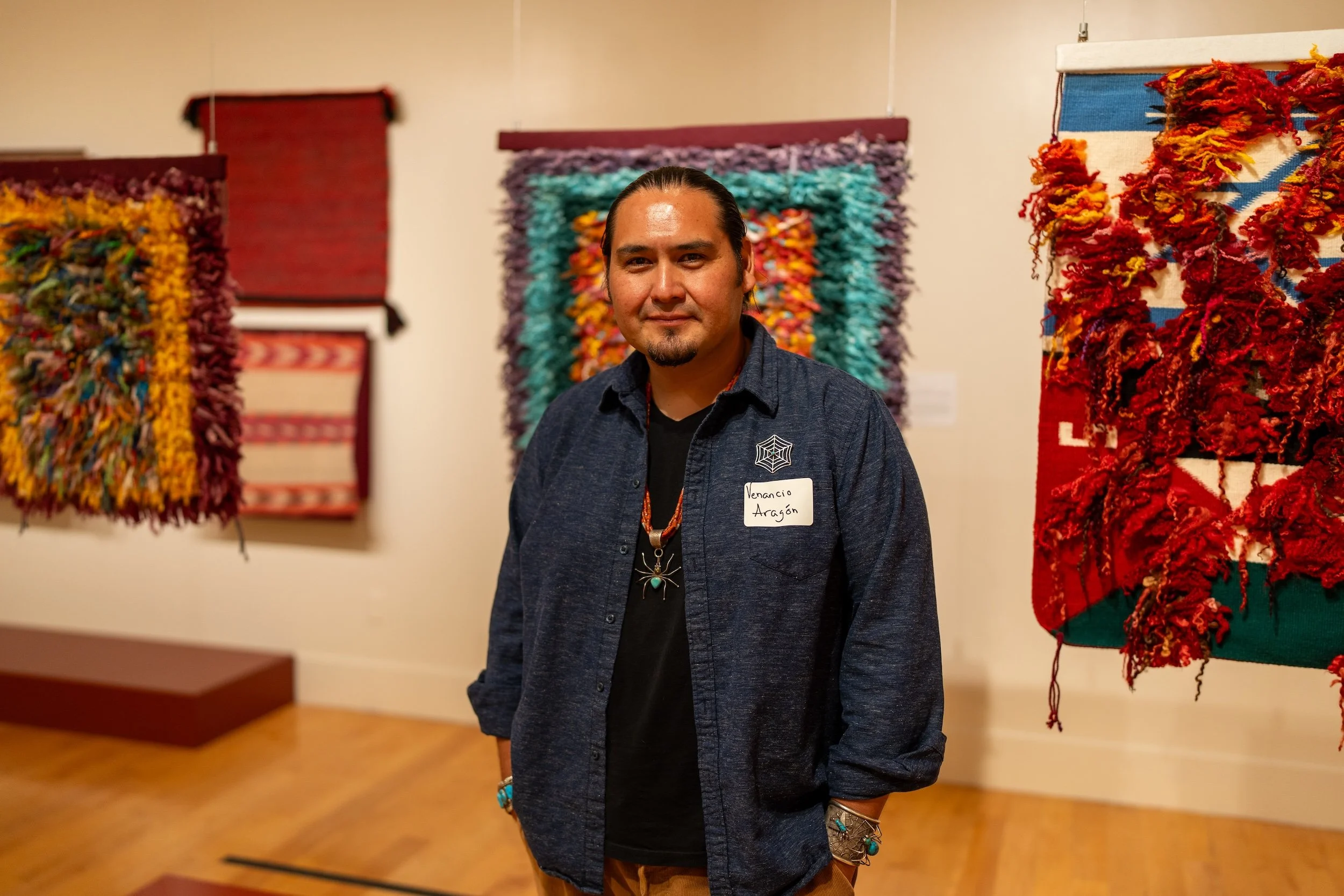
Venancio Aragón, Guest Curator
-
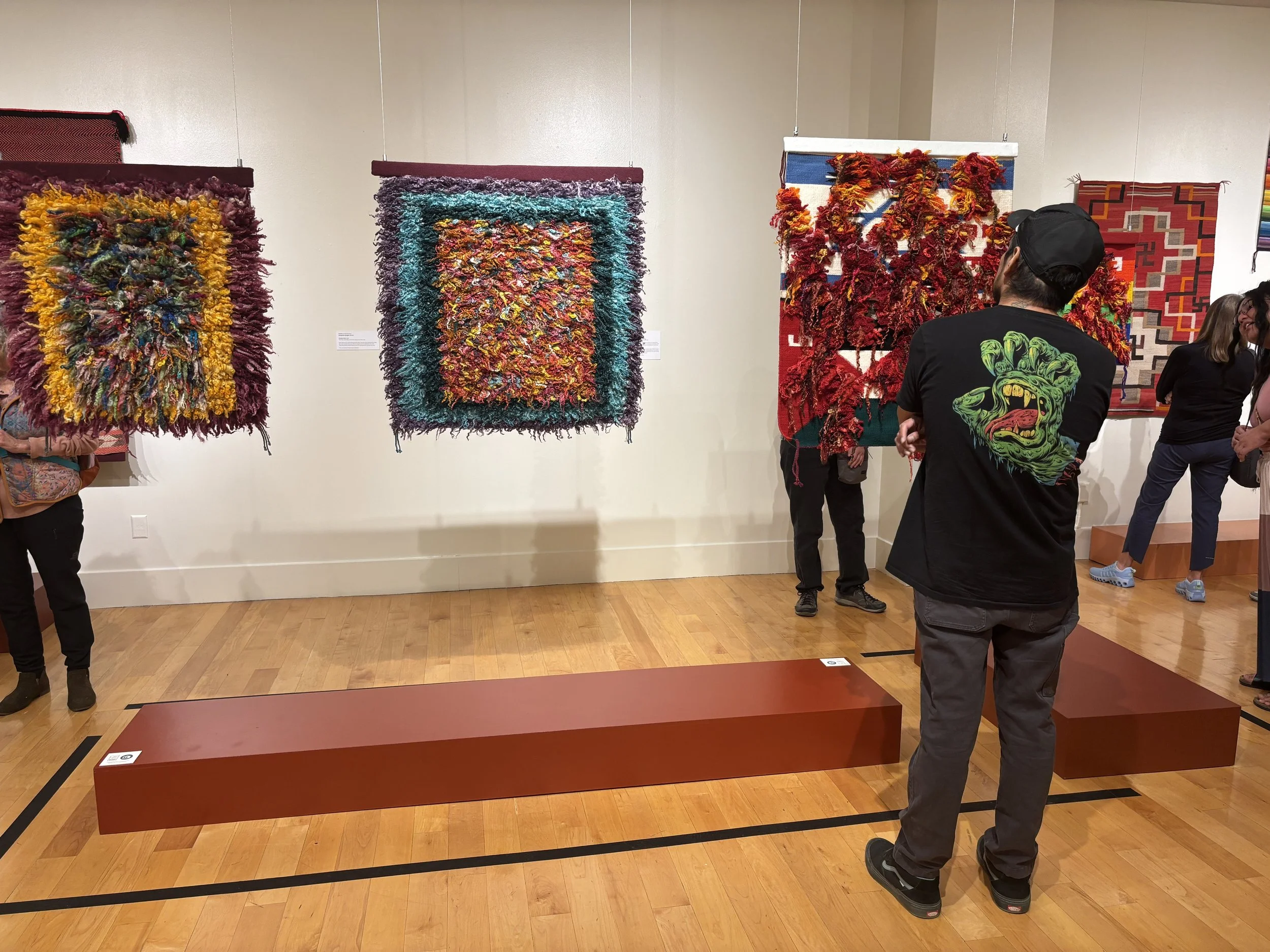
Venancio Aragón, a citizen of the Navajo Nation, is an experimental textile weaver whose work combines ancient techniques with vibrant polychromatic designs, that has come to be known as an “Expanded Rainbow Aesthetic.” Aragón learned to weave from his mother, Irveta, at the age of ten and has developed a creative practice focused on reviving rare and lesser-known techniques including twills, two-faced, shaped weavings, tufting, and hybrids.
Fusing his cultural background with the knowledge he gained as he earned degrees in Cultural Anthropology (University of New Mexico) and Native American & Indigenous Studies (Fort Lewis College), Aragón views Navajo weaving as a way to preserve Diné culture and identity by promoting the continuation and practice of his ancestors’ legacy. Aragón’s textiles have been featured in major publications and exhibited widely, and he is a past Rollin and Mary Ella King Native Artist Fellow with the School for Advanced Research (Santa Fe, NM), and has received numerous accolades for his textiles, including Best of Class-First Place and Judge’s Choice awards from the Heard Museum Guild Indian Fair & Market and the Southwestern Association for Indian Arts’ Santa Fe Indian Market. In addition to his weaving practice in his home studio in Farmington, NM, Aragón is faculty of Navajo Cultural Arts at Diné College and currently pursuing a master's in education from Fort Lewis College.
-
“Diné Weaver Venancio Aragón Dyes Wool With Kool-Aid,” Sháńdíín Brown and Zach Feuer, HYPERALLERGIC, November 18, 2025
Colorado Arts Spotlight, Colorado Public Radio, May 29, 2025
“Speak Softly And…” Judith Reynolds, Durango Herald, September 5, 2025
“Modern Navajo Weaving Disrupts What You Know,” Durango Local News, September 23, 2025
Dates
May 29-November 13, 2025
Location
Center of Southwest Studies at Fort Lewis College (Durango, CO)
Curated by
Venancio Aragón (Diné)
Oversaw
Exhibition logistics: artwork loan agreements and shipping arrangements; installation; lighting and didactics; press materials and promotion; reception and events; photo-documentation; design of digital catalog and print materials.
Curating at the Center for Southwest Studies was amazing. They gave me full control over selections and curatorial text.
Most weaving exhibitions I’ve seen were organized by non-Native scholars or collectors, often with unequal power dynamics. This was an opportunity to tell our story in our own voices, a decolonizing project.
- Venancio Aragón (Hyperallergic, Nov. 18, 2025 interview with Sháńdíín Brown + Zach Feuer)
Diné culture and economy radically changed during the period of American expansionism and settler colonialism in the 1860s. Before this period, “rugs” were a foreign concept as most Diné textiles were made for utilitarian purposes, serving as clothing, blankets, equestrian gear, and trade items. Western ethnographers, anthropologists, and art historians have constructed most of the academic framework for documenting and understanding Diné textiles. Diné rugs are typically characterized by their designs, colors, and specific geometric elements, which adhere to the regional typology classification system. Until recently, the contributions of weavers and their creations were less emphasized in textile scholarship, as traditional academic approaches have not always recognized Diné weavers themselves as significant sources of information.
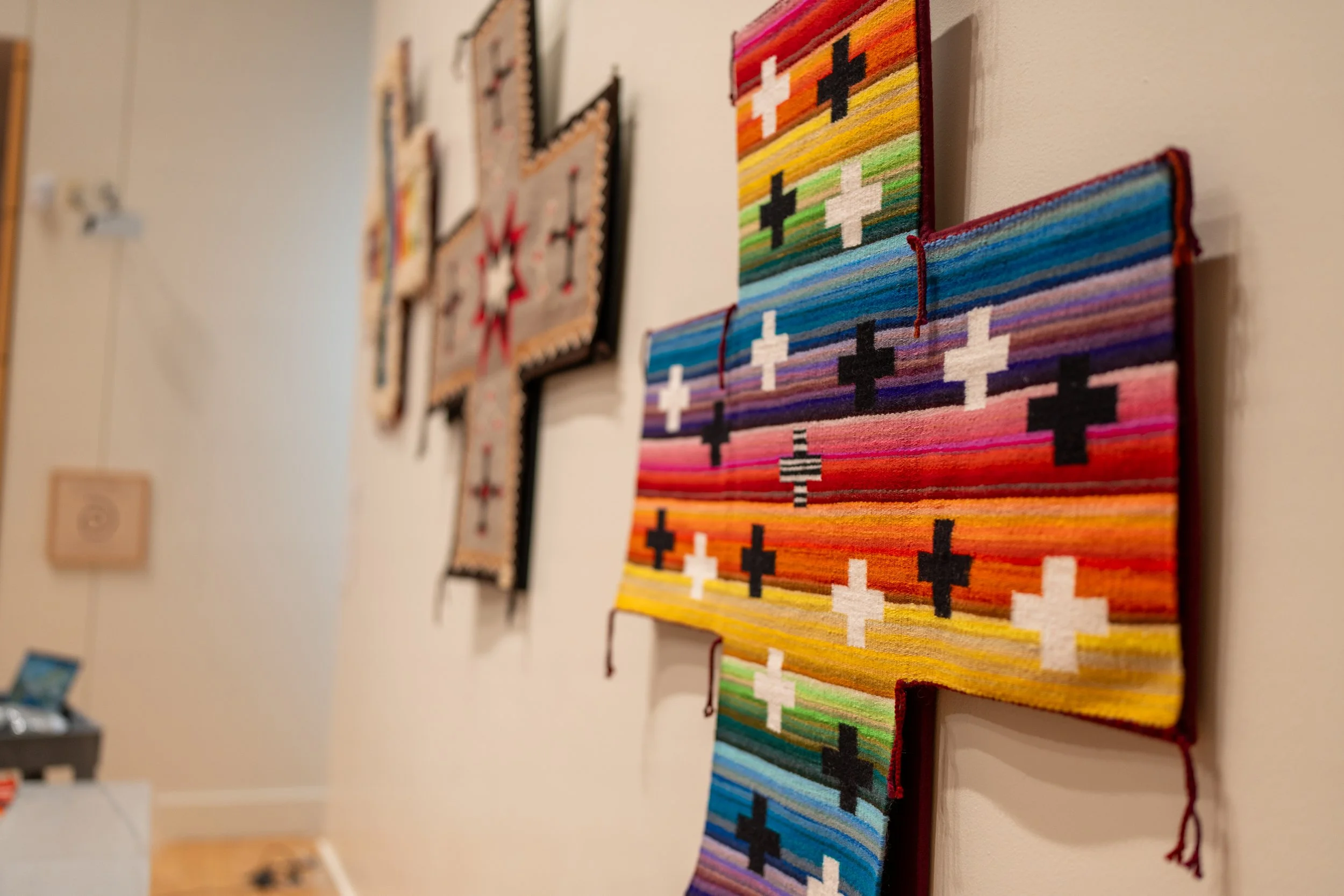
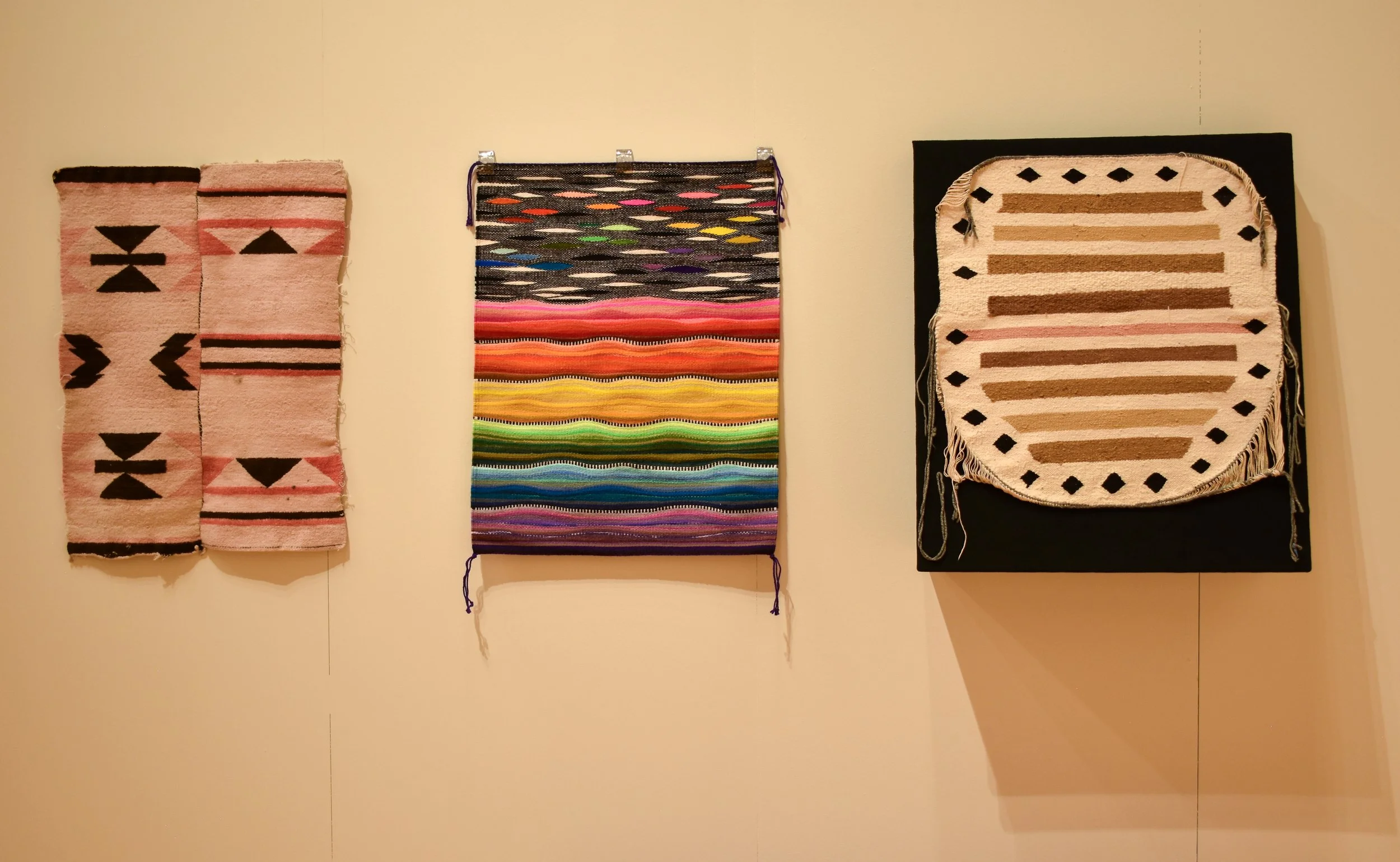
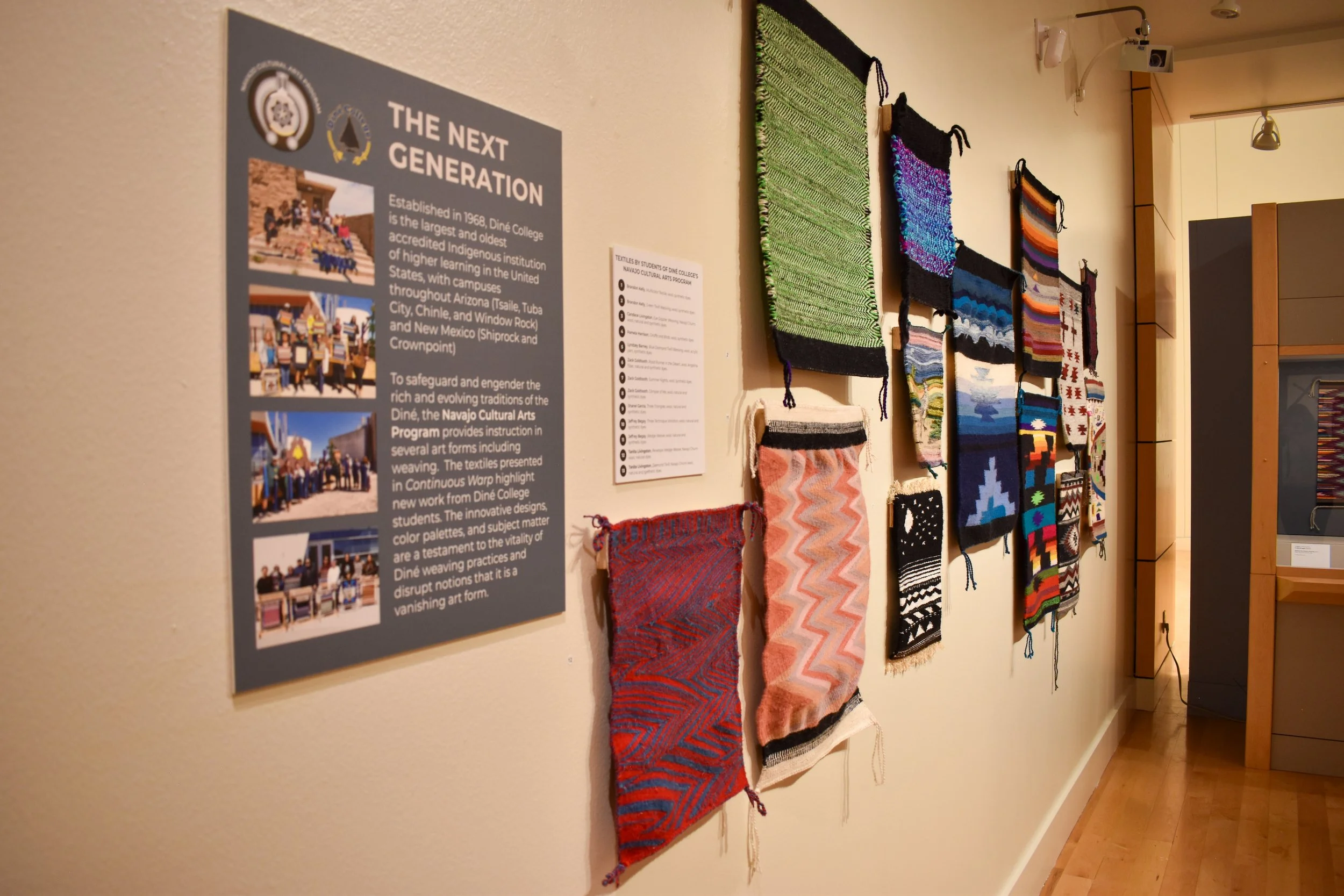
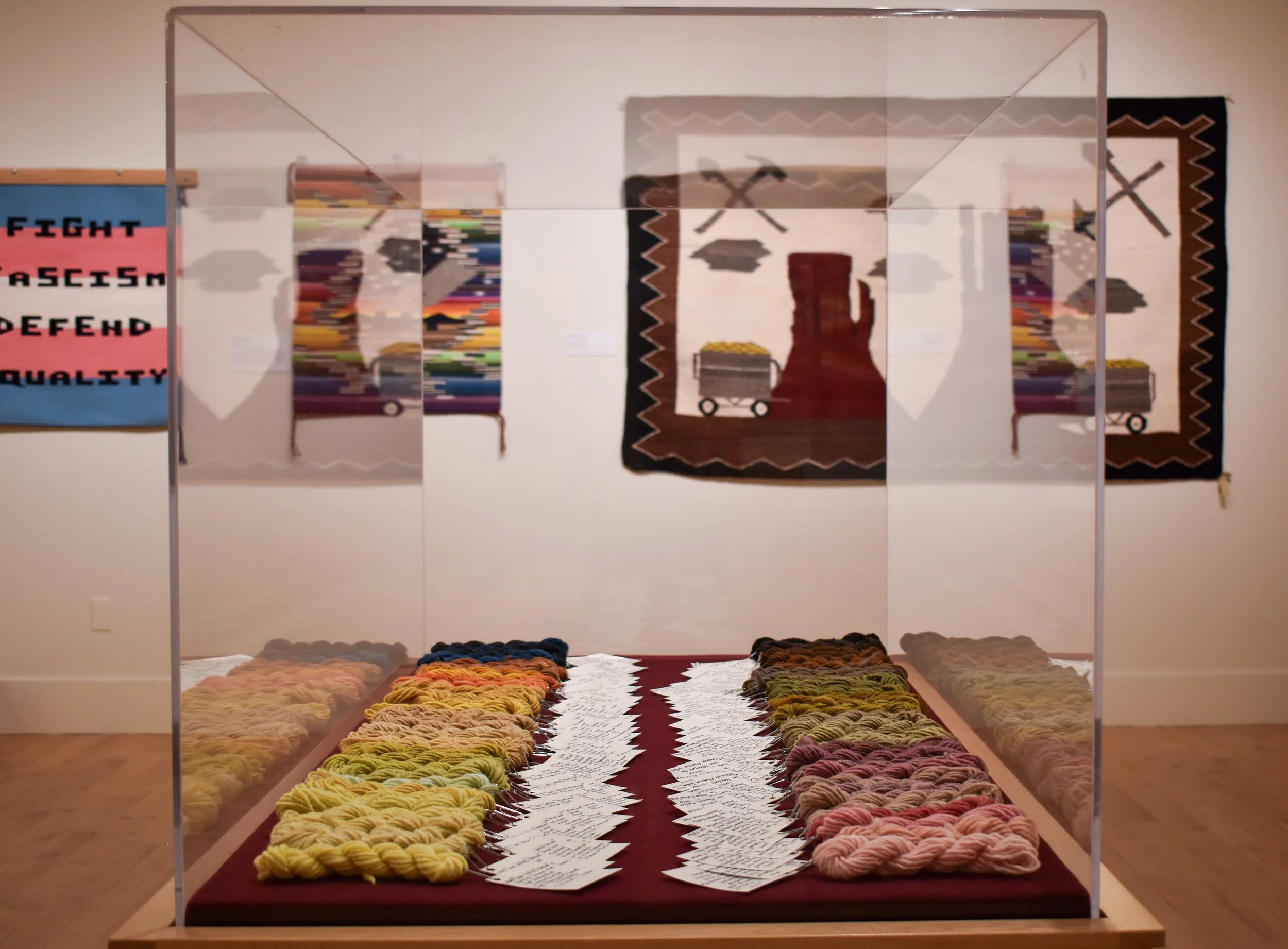
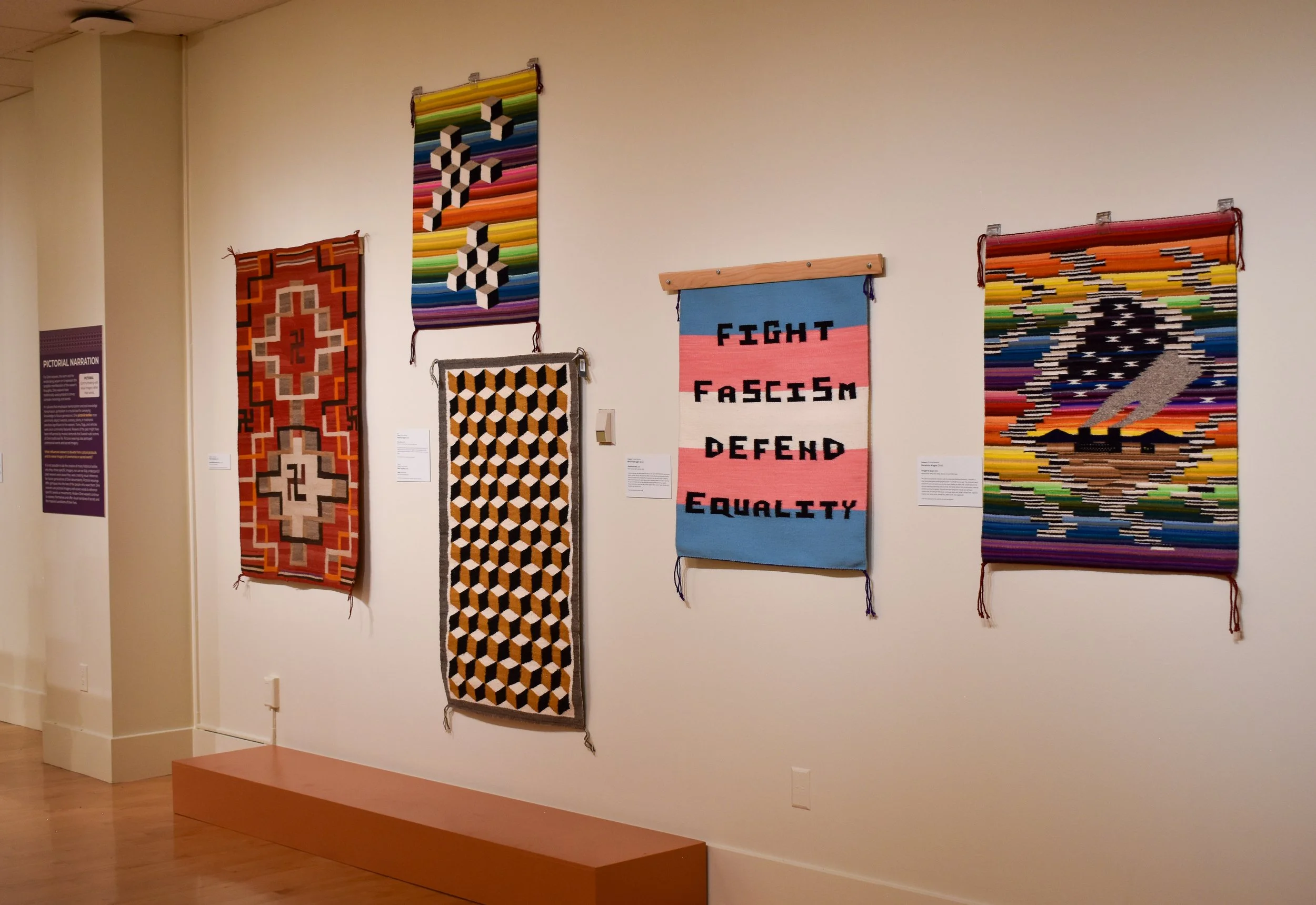
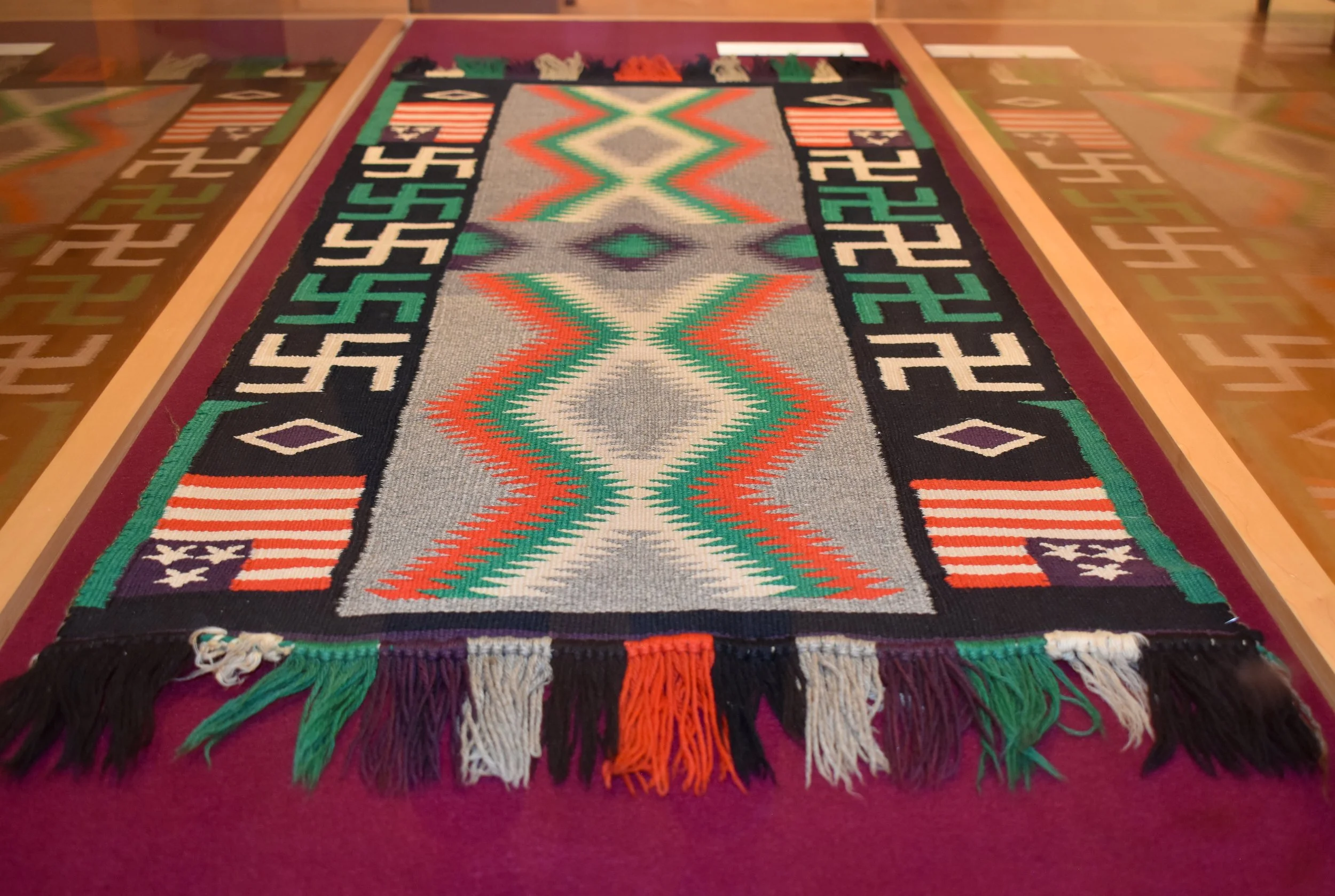
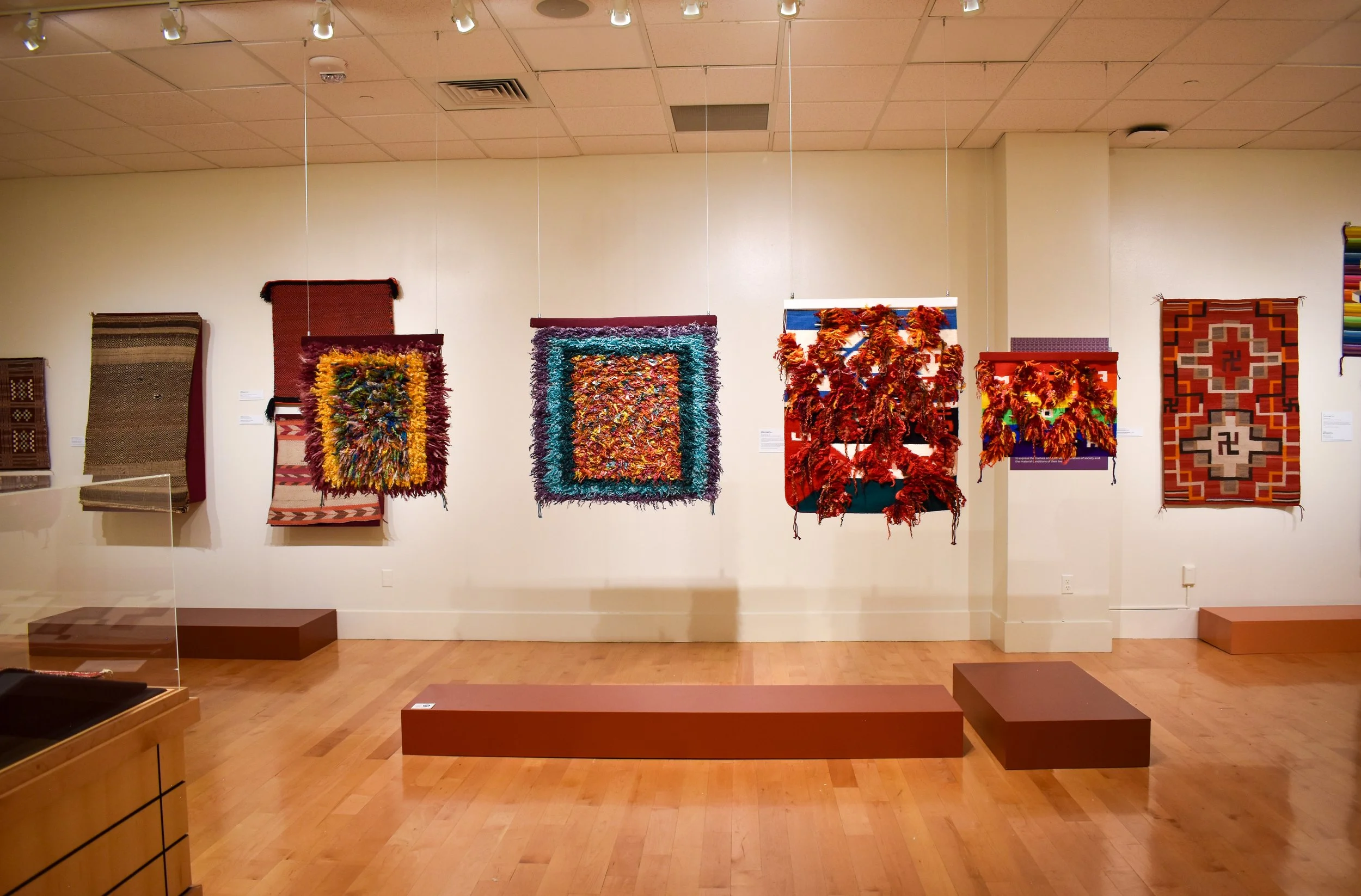
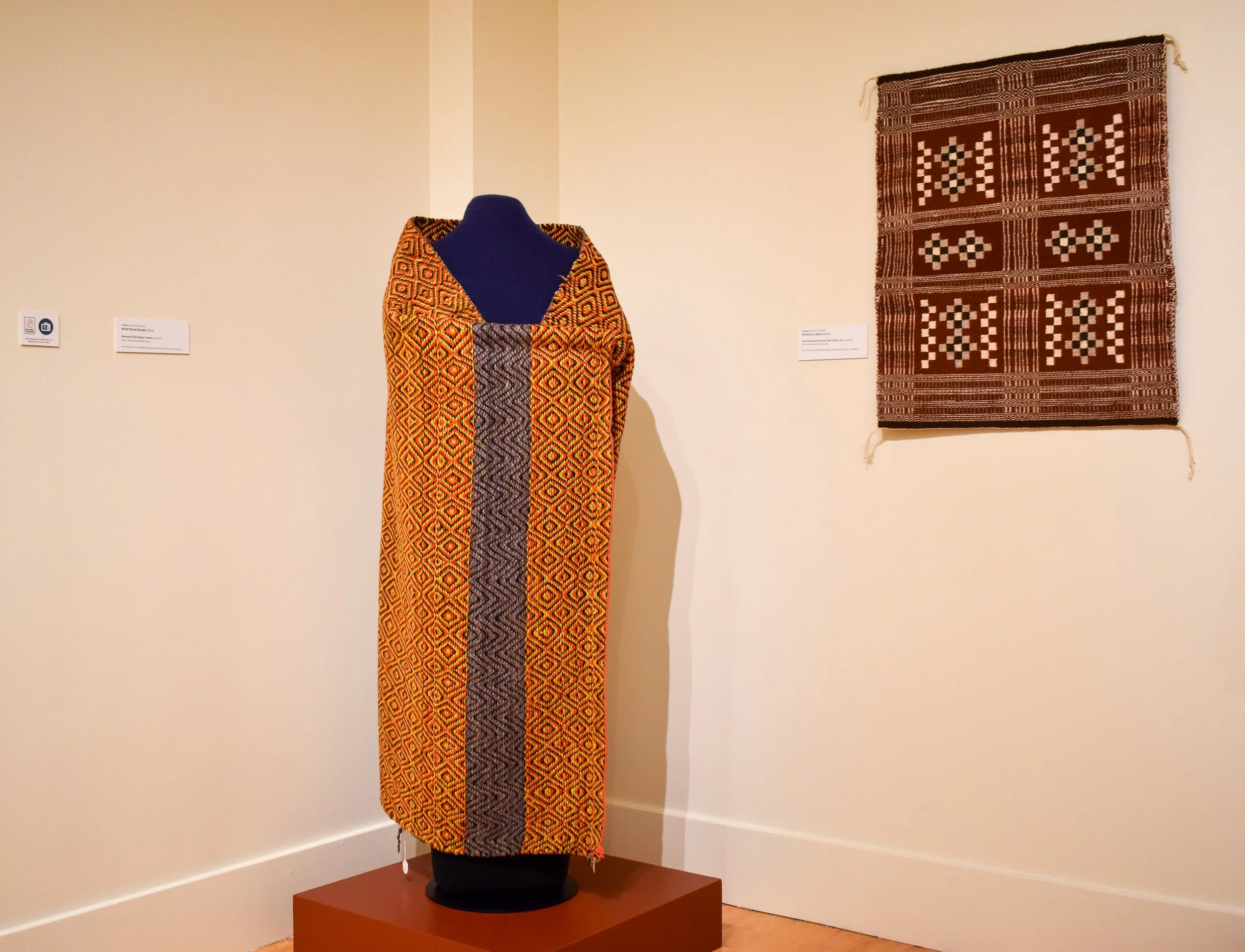
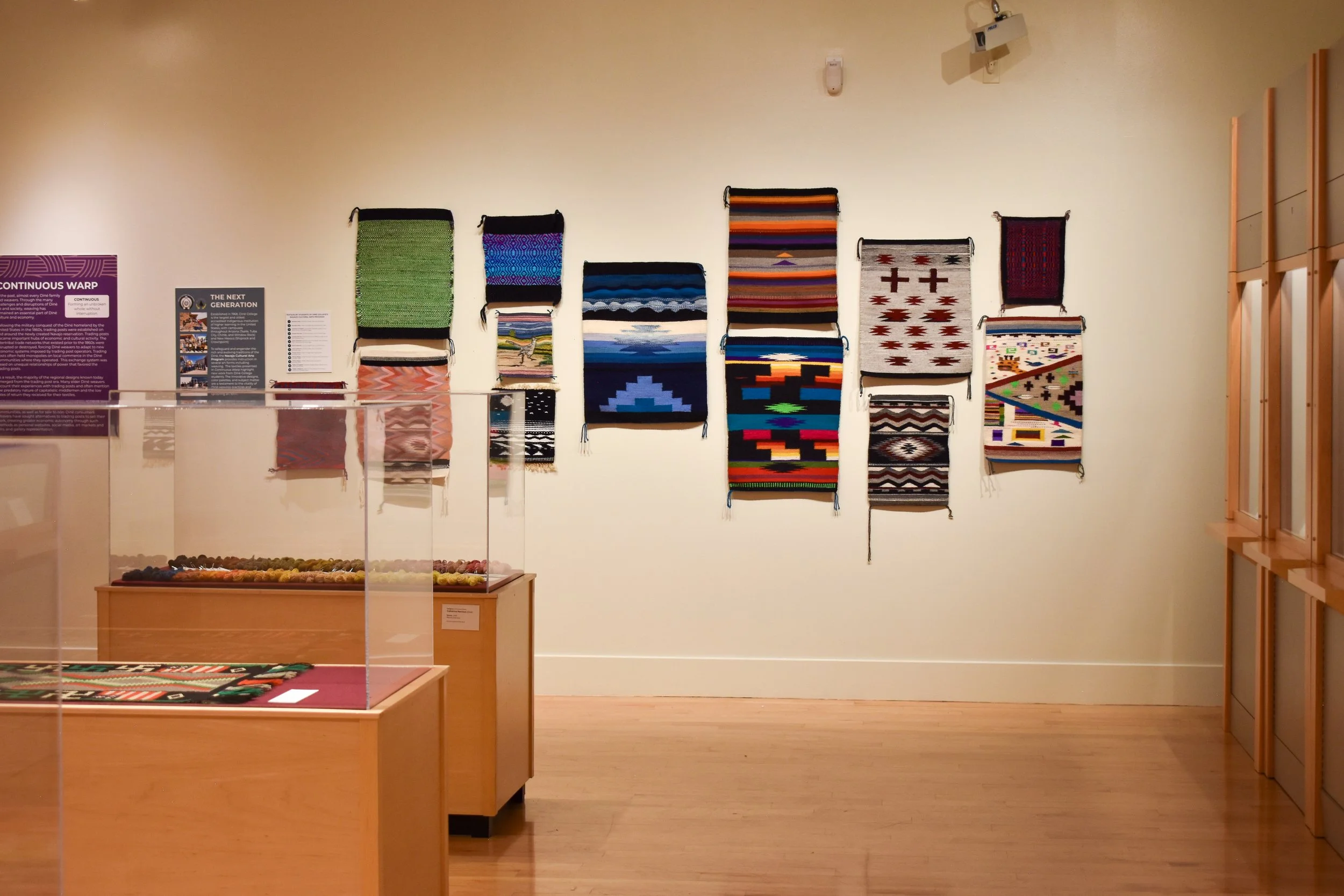
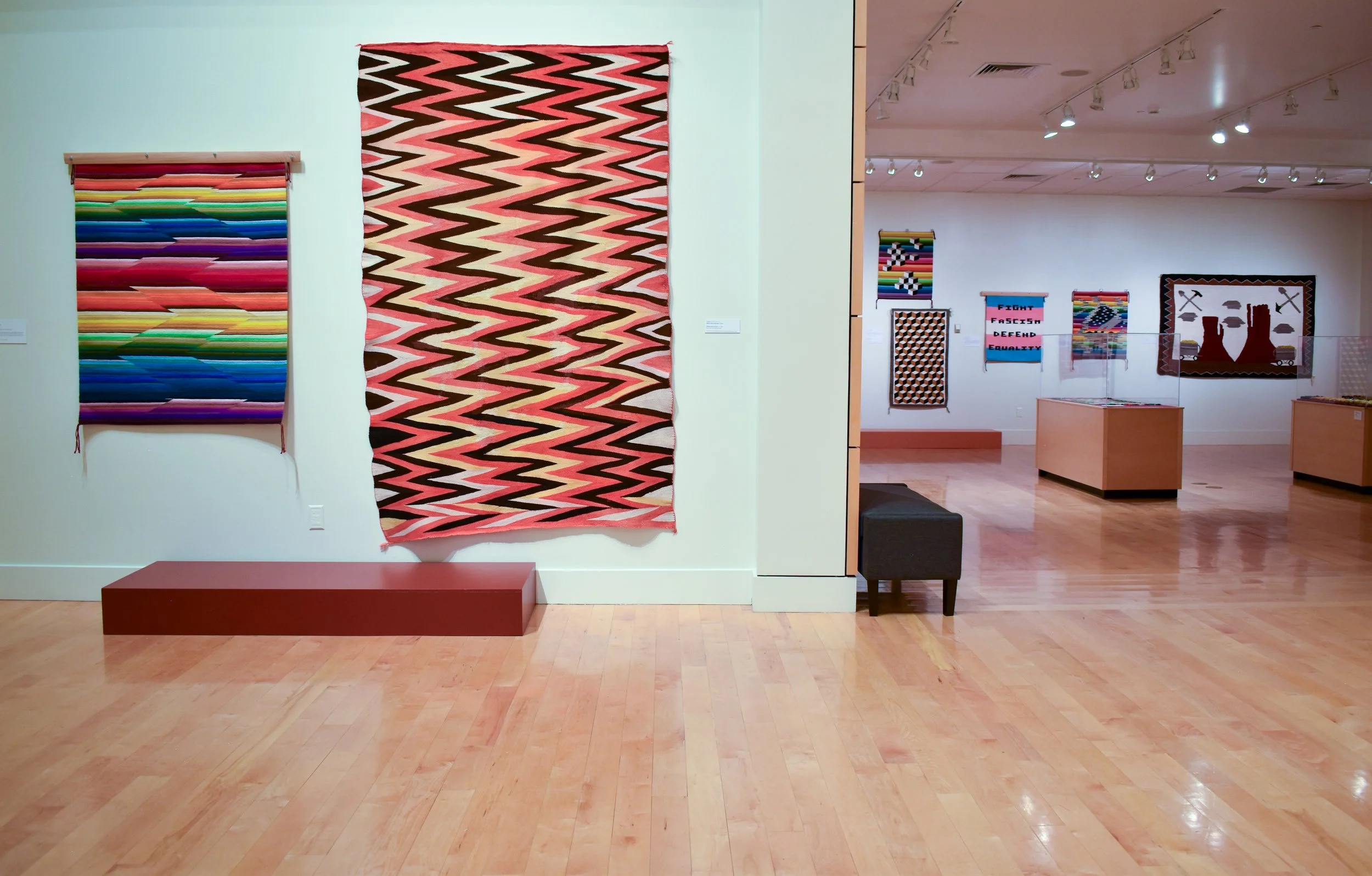
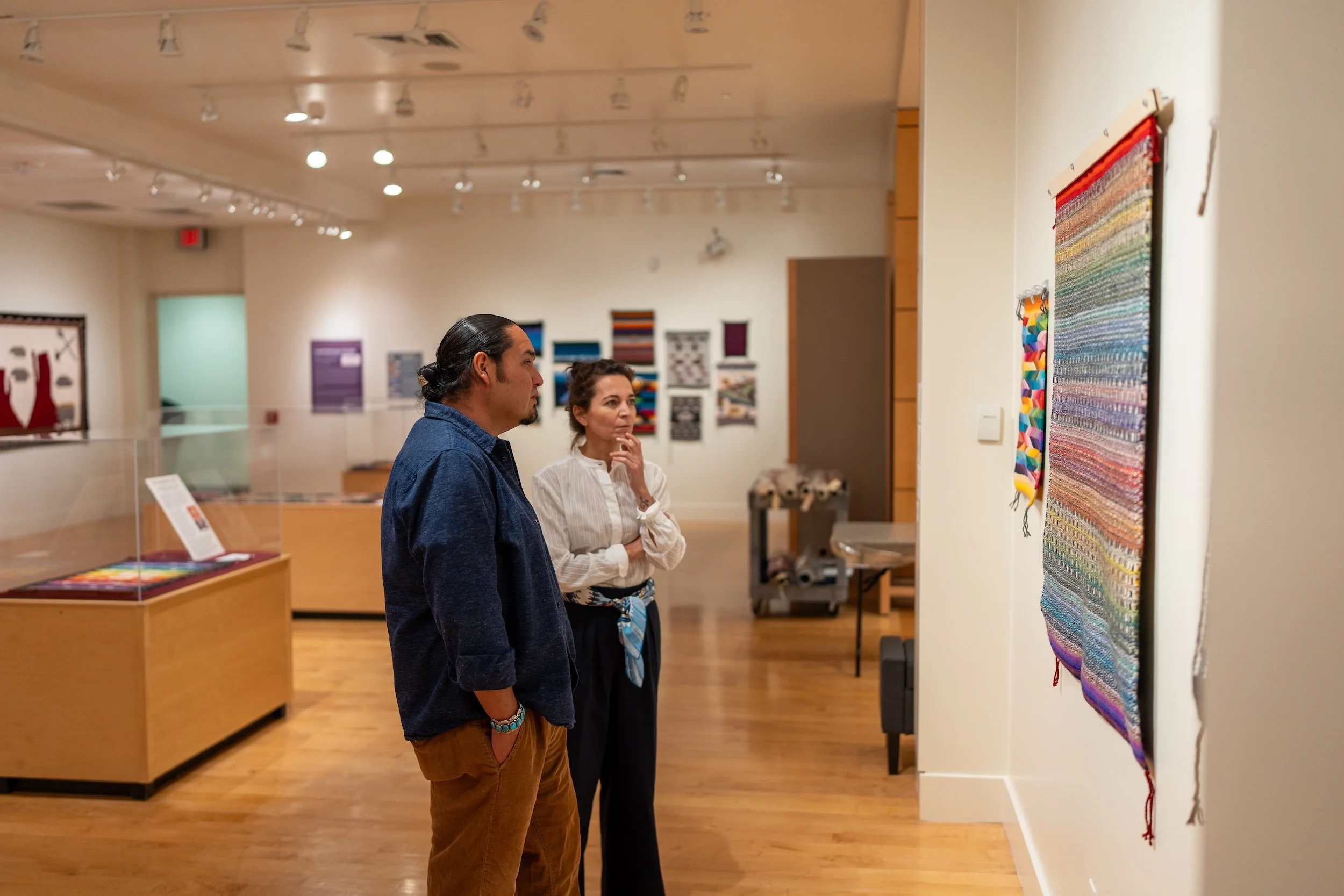
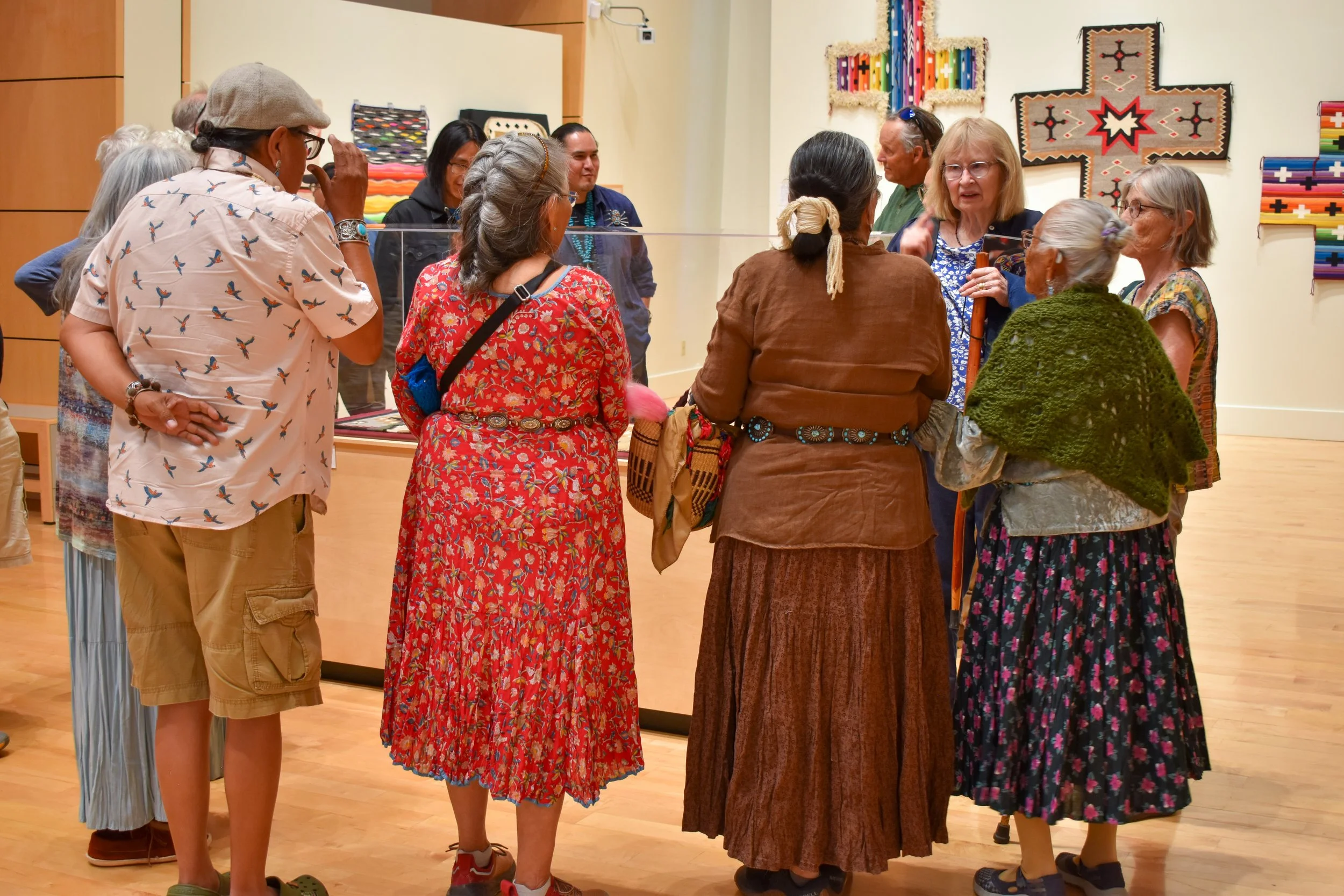
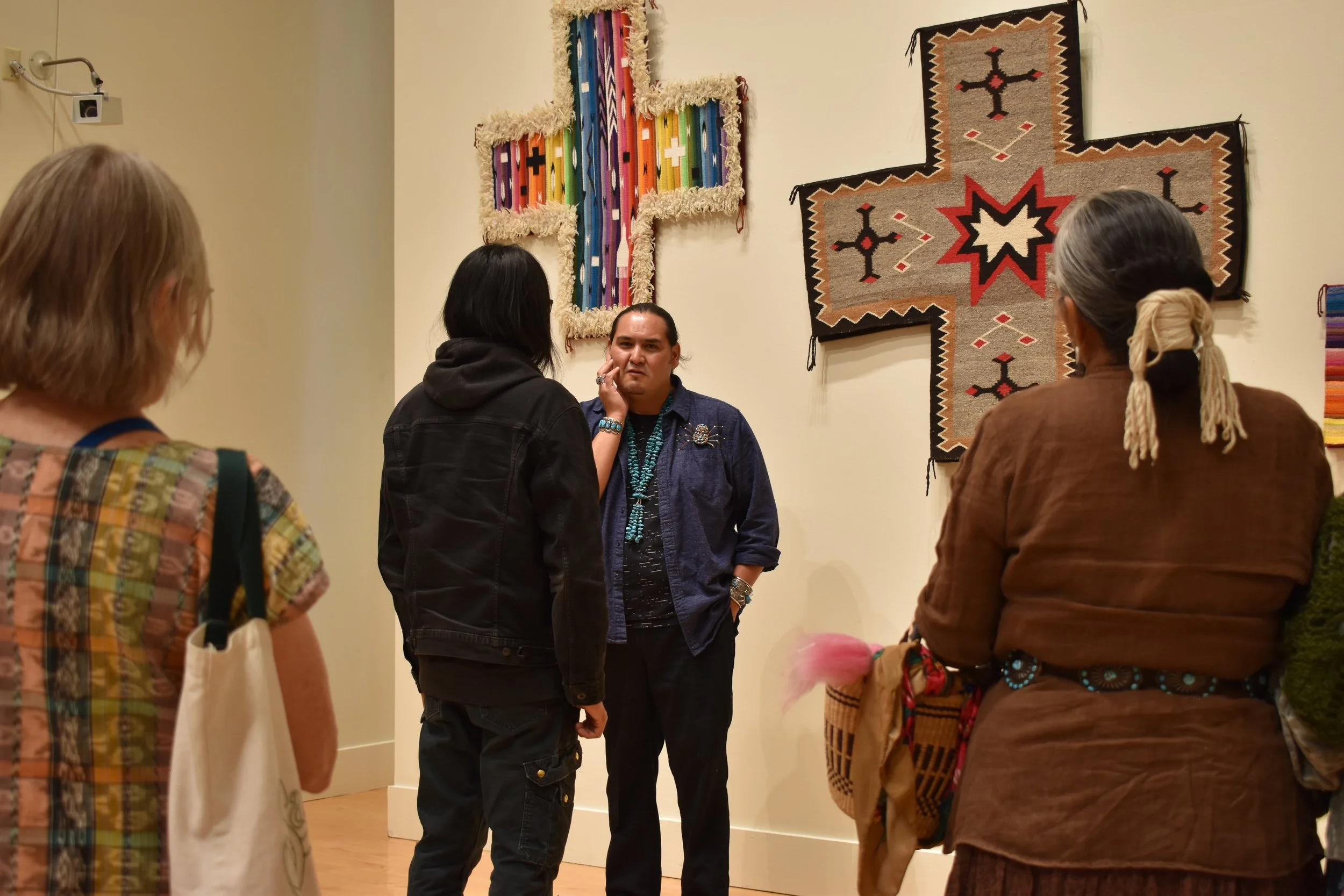
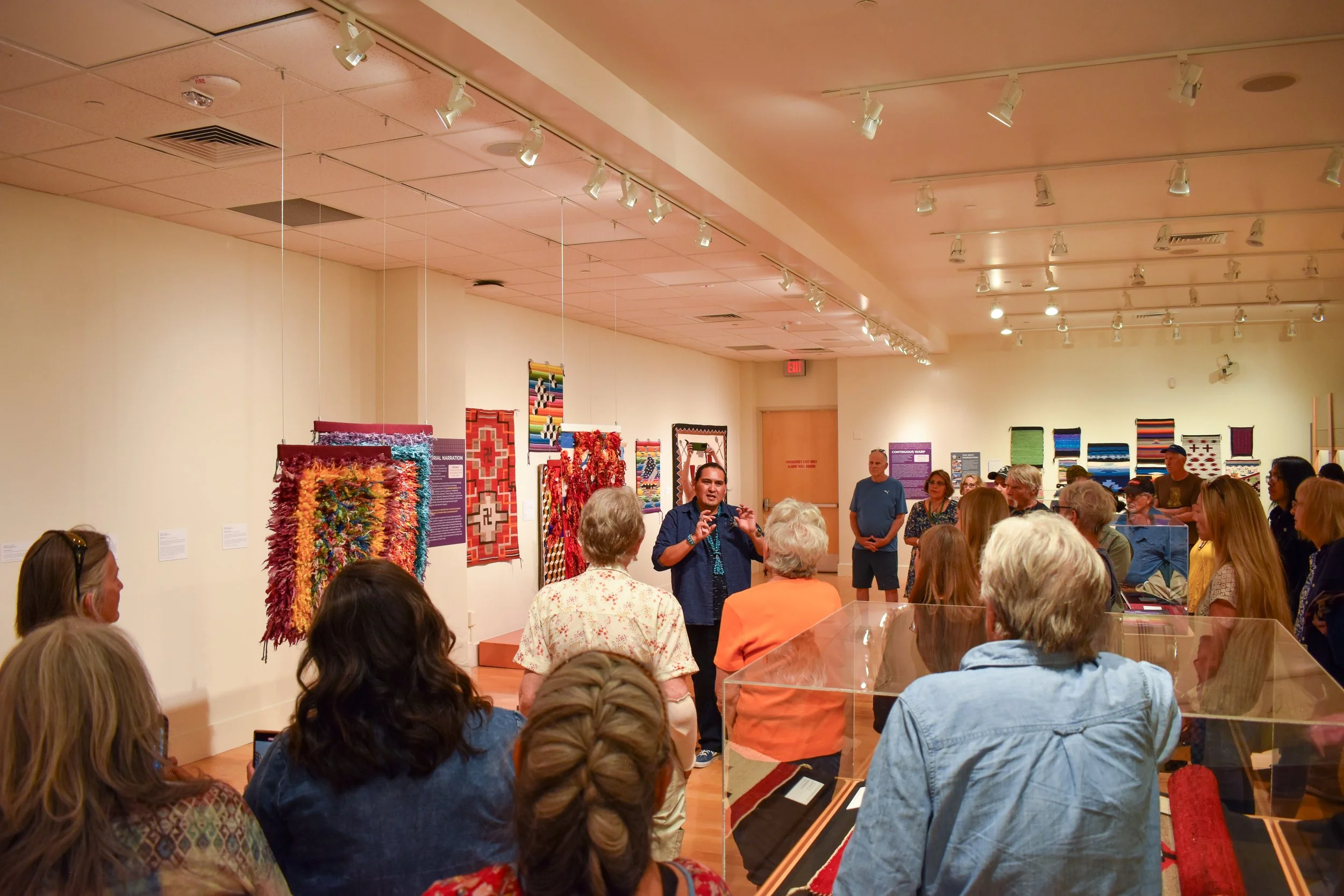
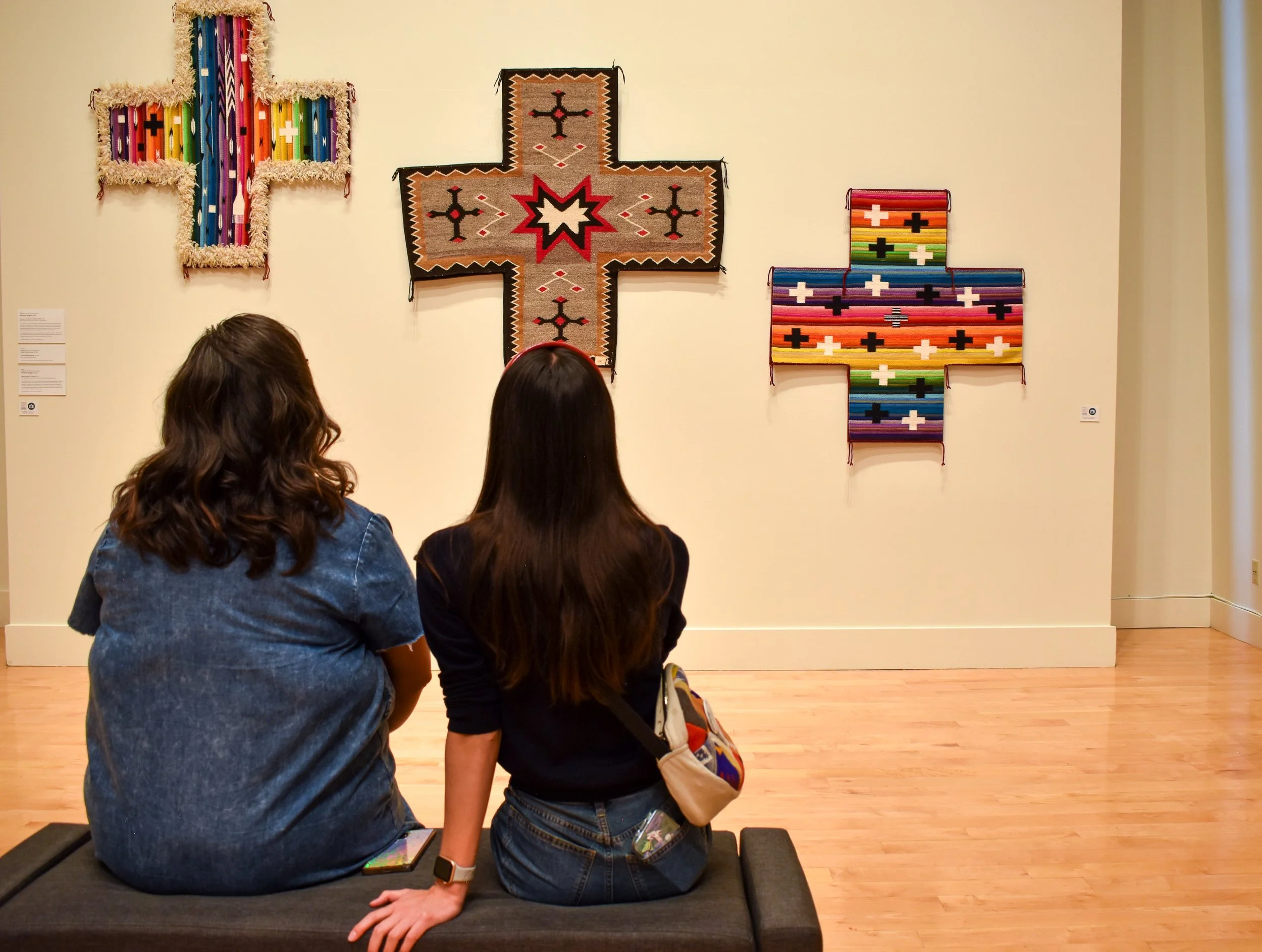
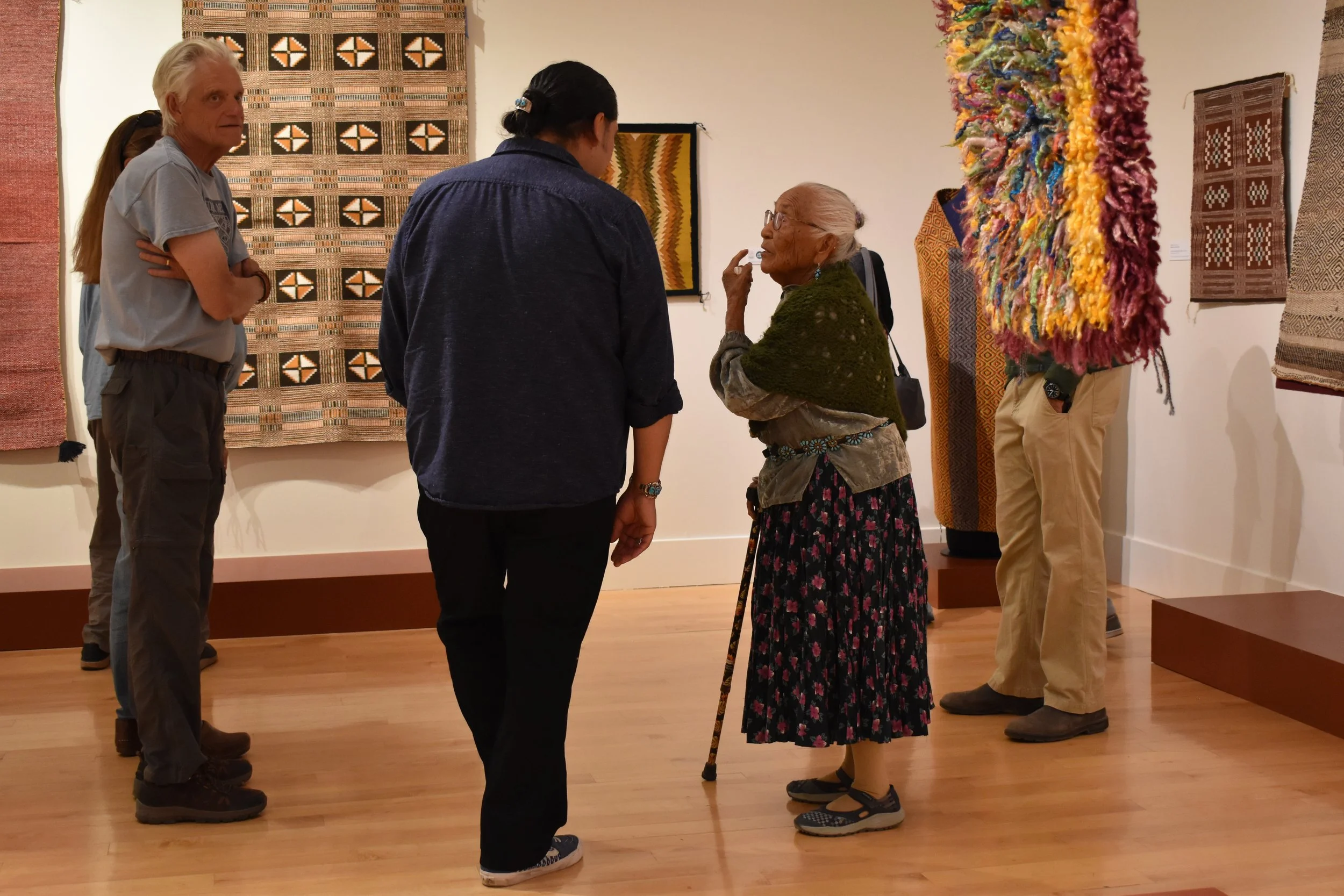
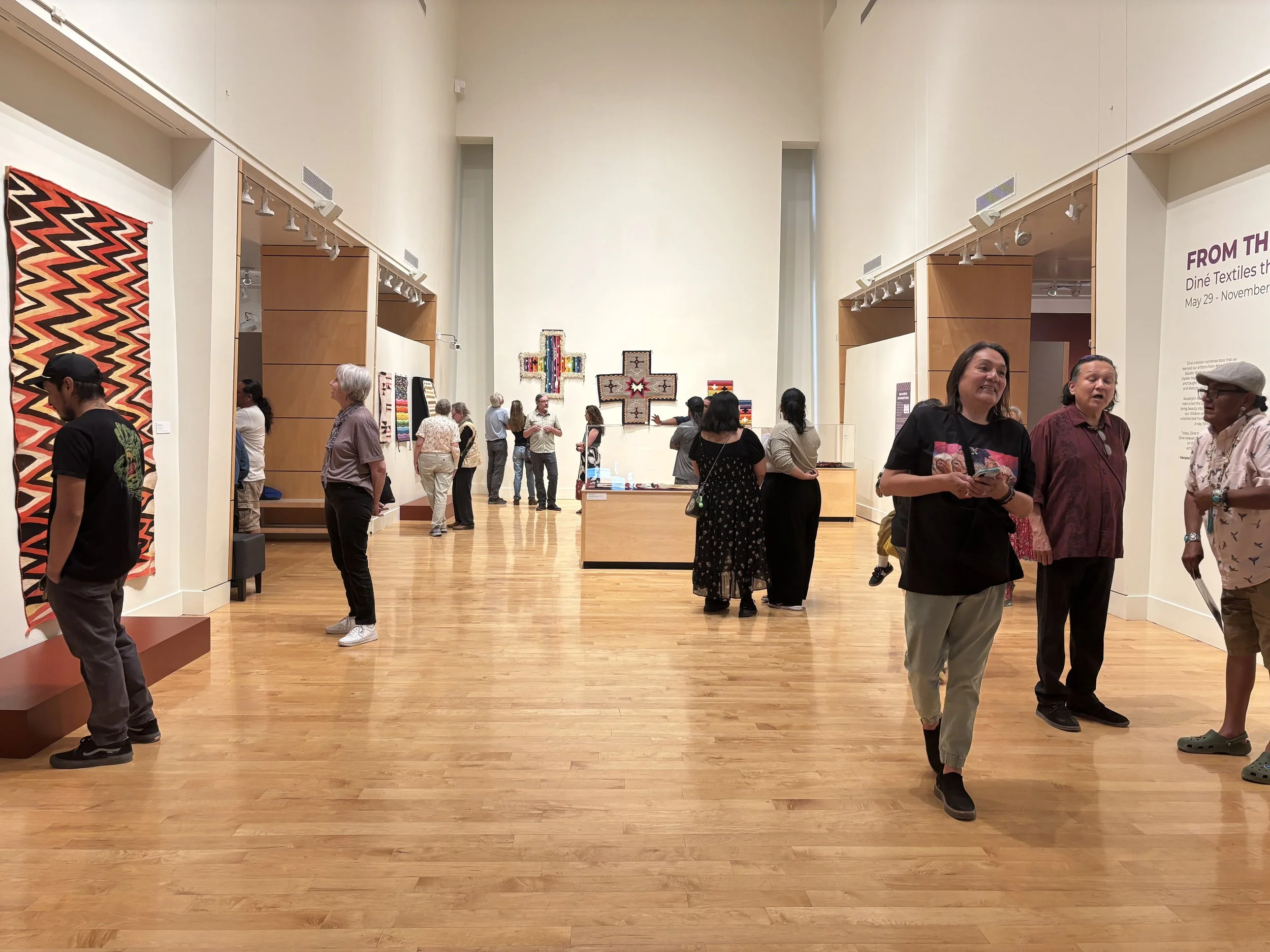
From the Fringes features a selection of textiles from the Center of Southwest Studies’ Durango Collection©, contemporary Diné weavings by Venancio Aragón, his mother Irveta Aragón, and Venancio’s students from Diné College’s Navajo Cultural Arts Program. The exhibition highlights a range of technical and aesthetic oddities that disrupt and complicate regional typology. From the Fringes celebrates unique and overlooked weavings of the Diné textile repertoire that have been overshadowed and understudied.
This exhibition focuses on four themes of weaving that inhabit the “fringes” of Diné textile studies.
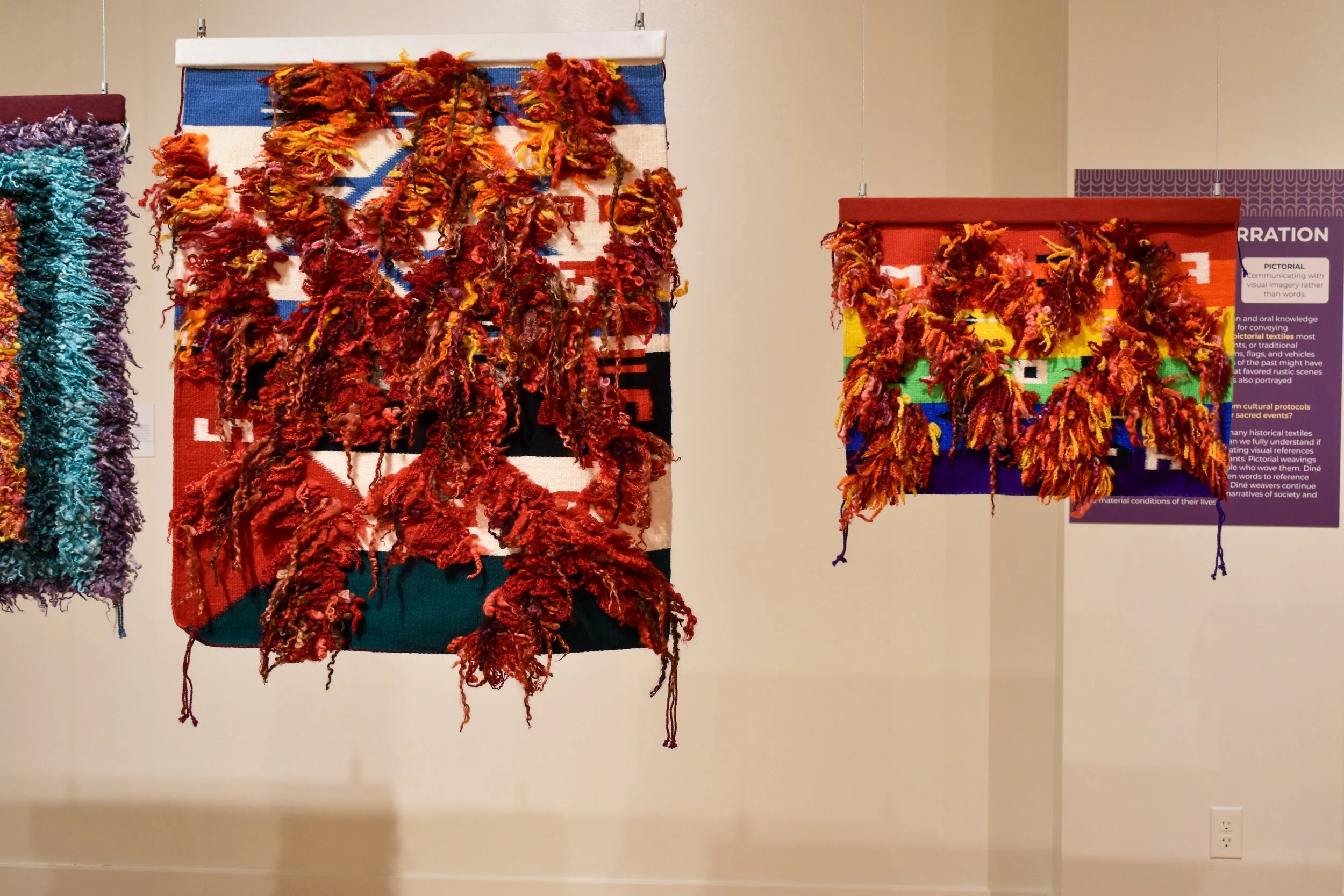
Polymorphic Experimentation displays unique innovations introduced by Diné weavers that challenge conventions of textile shapes and form.
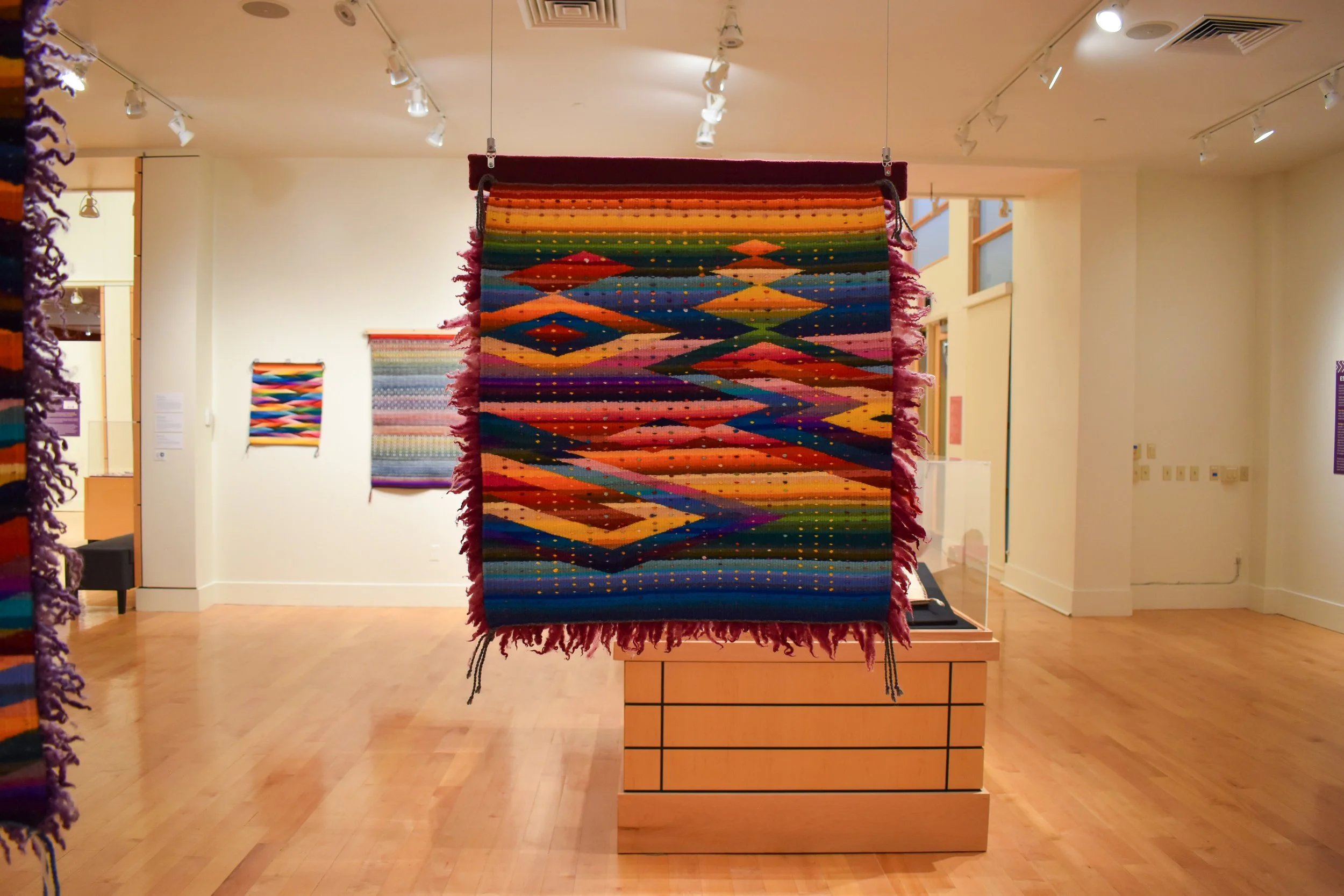
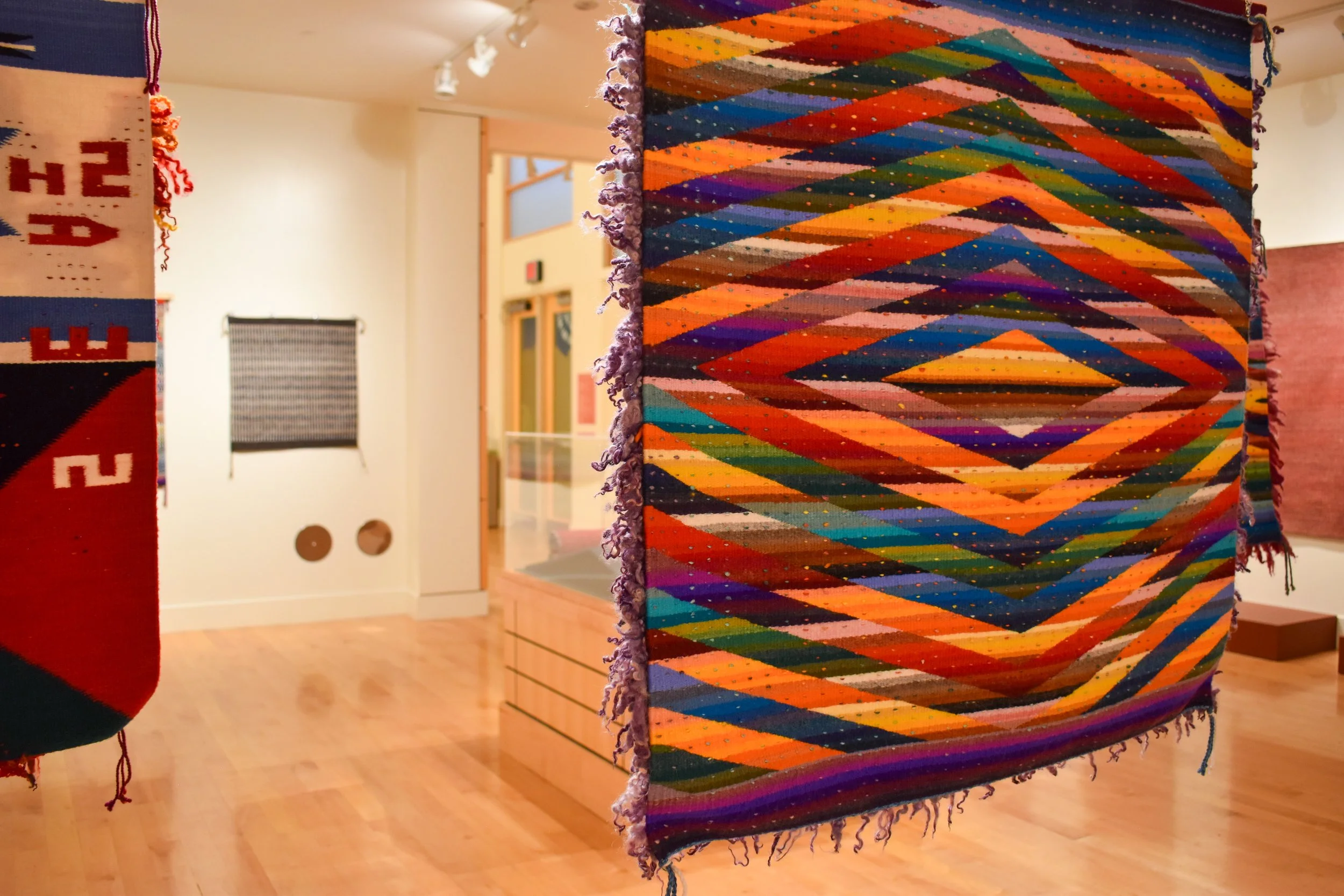
Esoteric Equations highlights rare Diné weaving techniques that involve complex mathematical manipulations of the loom known by only a select number of weavers.
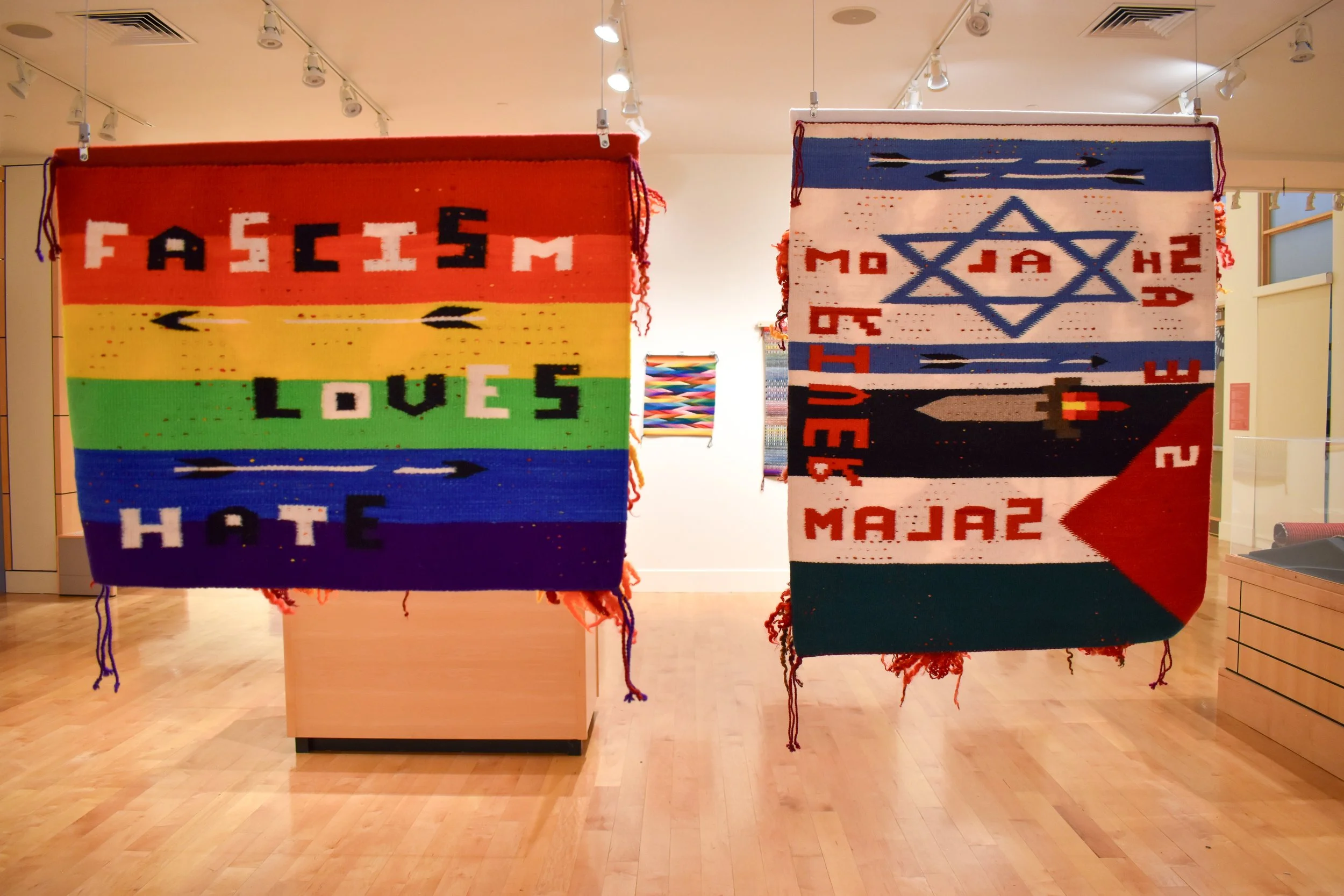
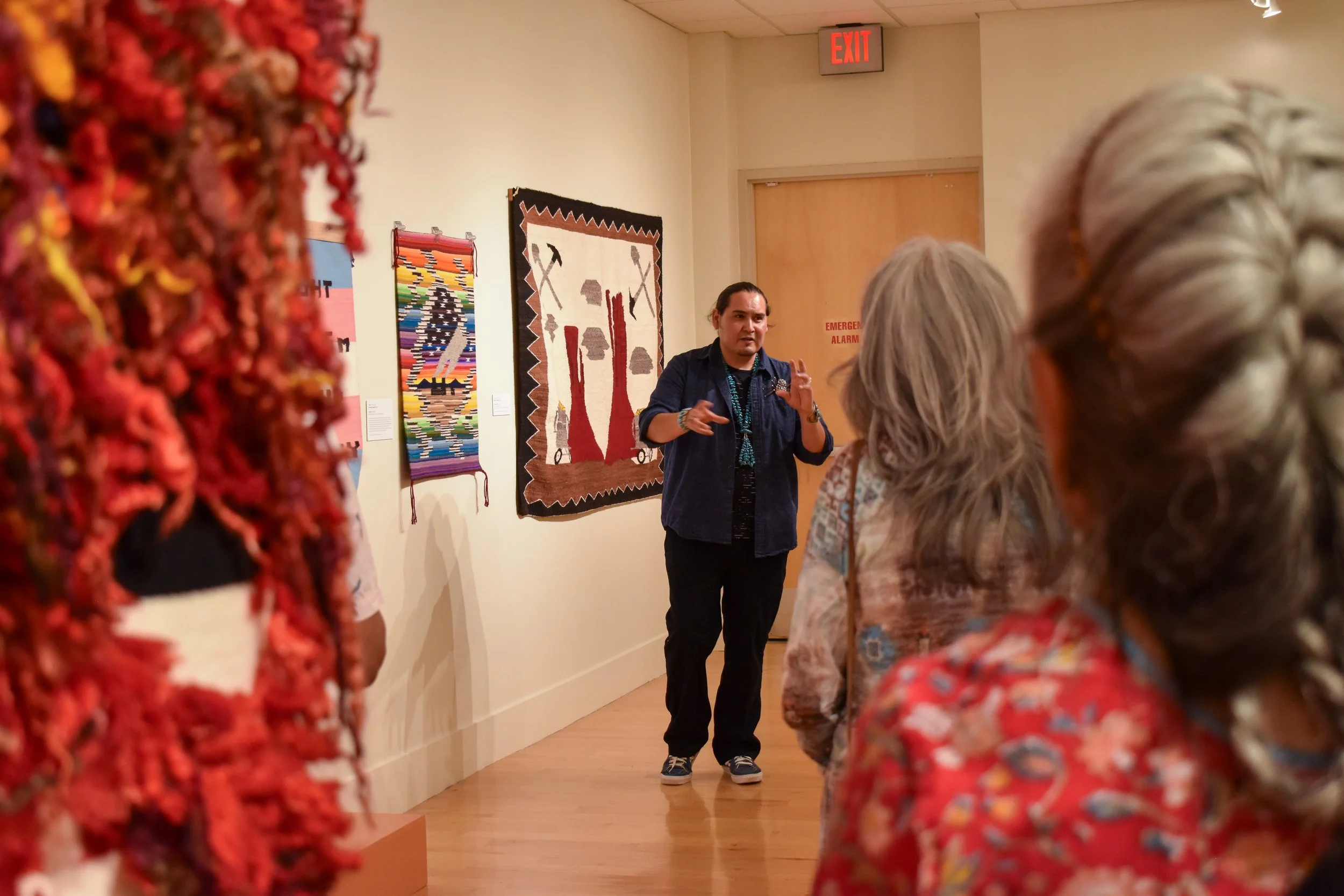
Pictorial Narration examines weavings with narratives that interact with broader socio-political movements, environmentalism, and material conditions of Diné weavers.
Continuous Warp presents new works by Diné College students, highlighting the ongoing and evolving nature of Diné weaving as a vibrant cultural art form.
From the Fringes foregrounds Indigenous counter-narratives and disrupts traditional perspectives and interpretations of Diné textiles by Western scholars, who have classified and compartmentalized Diné weavings through a lens that prioritizes regional typology shaped by the settler gaze. In contrast, the featured weavers and their works illuminate ongoing innovations and experimentations within Diné weaving practice.
The textiles in From the Fringes raise questions that may not have definitive answers but compel us to keep asking them.