Constellations of Place
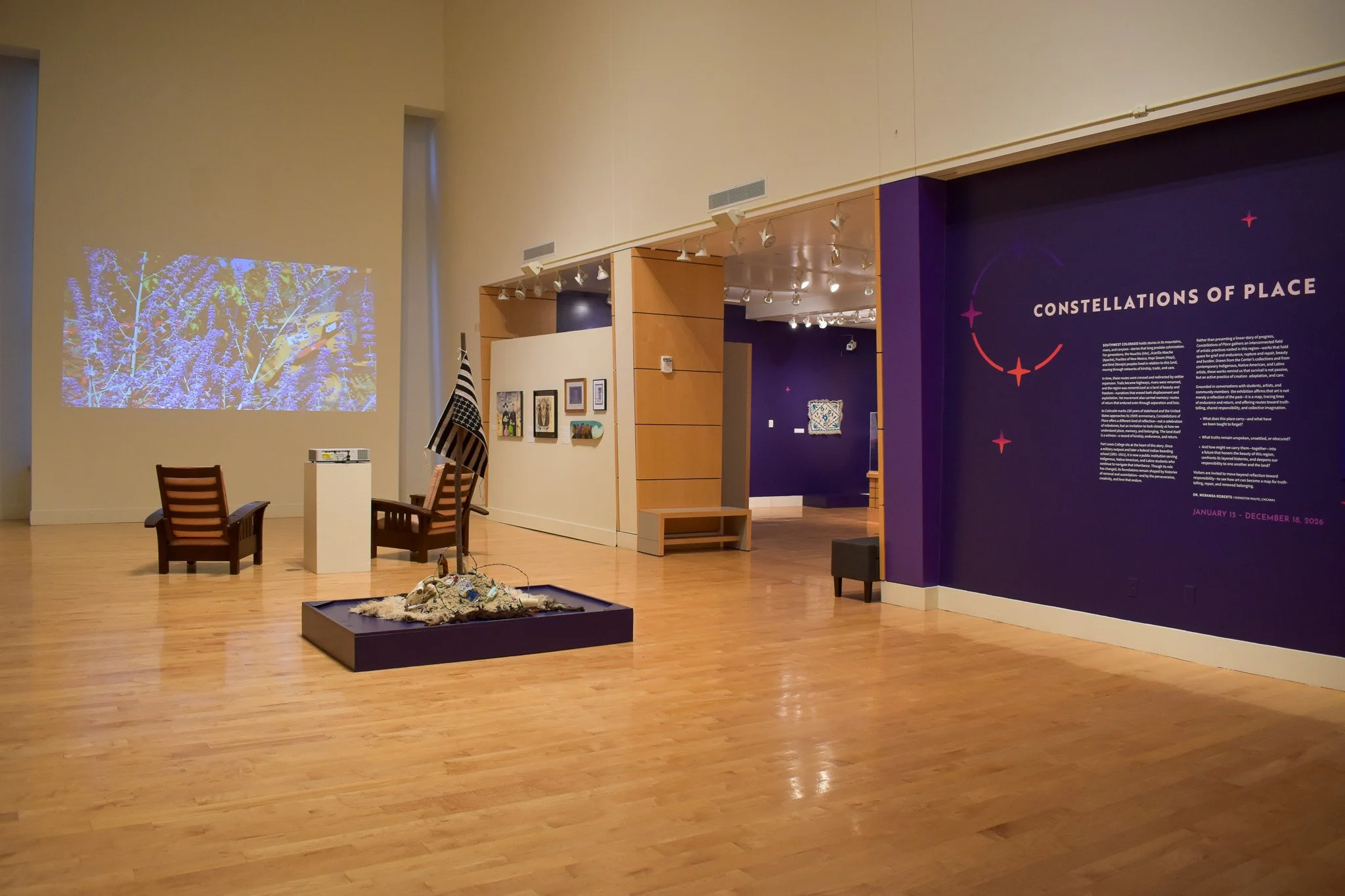
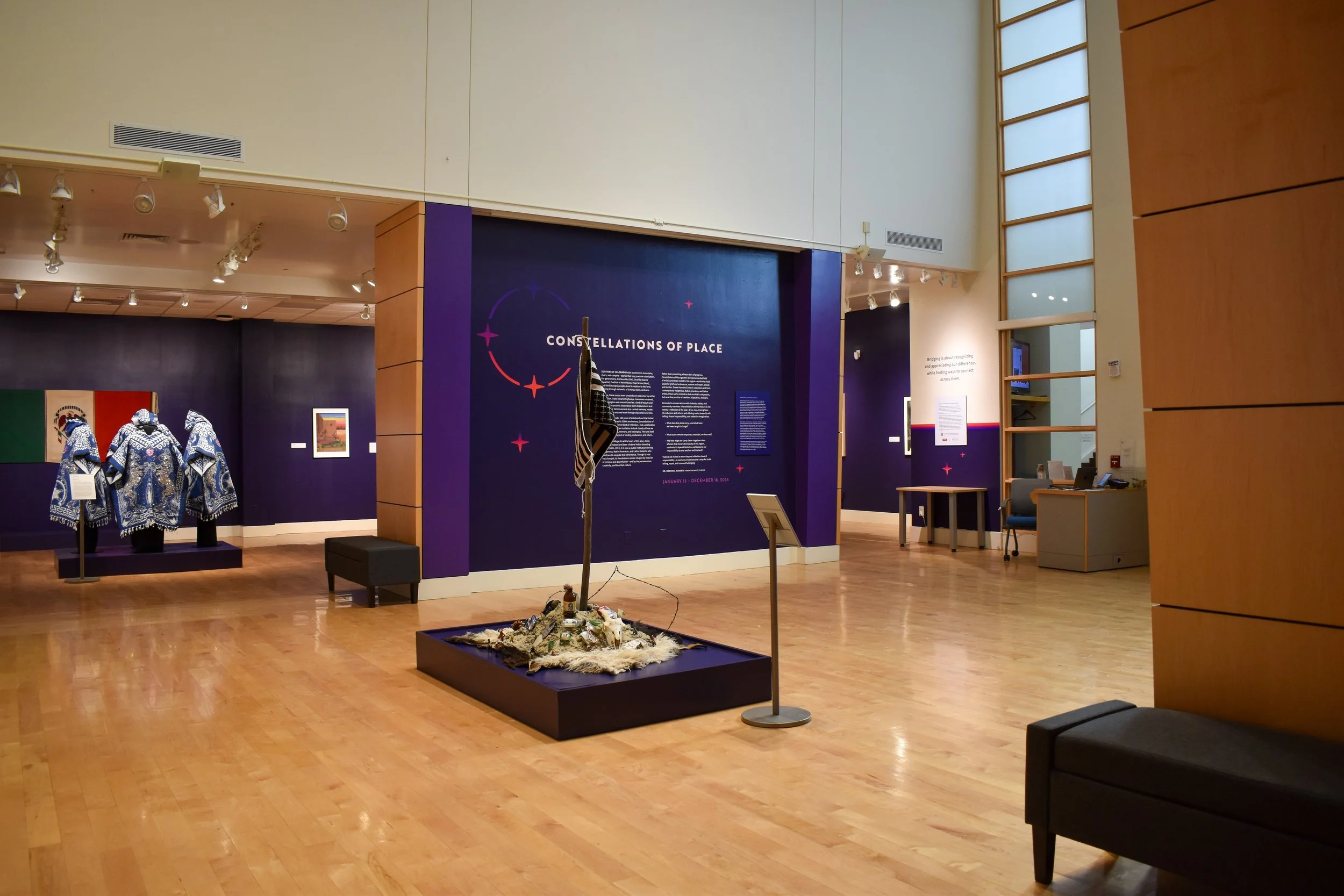
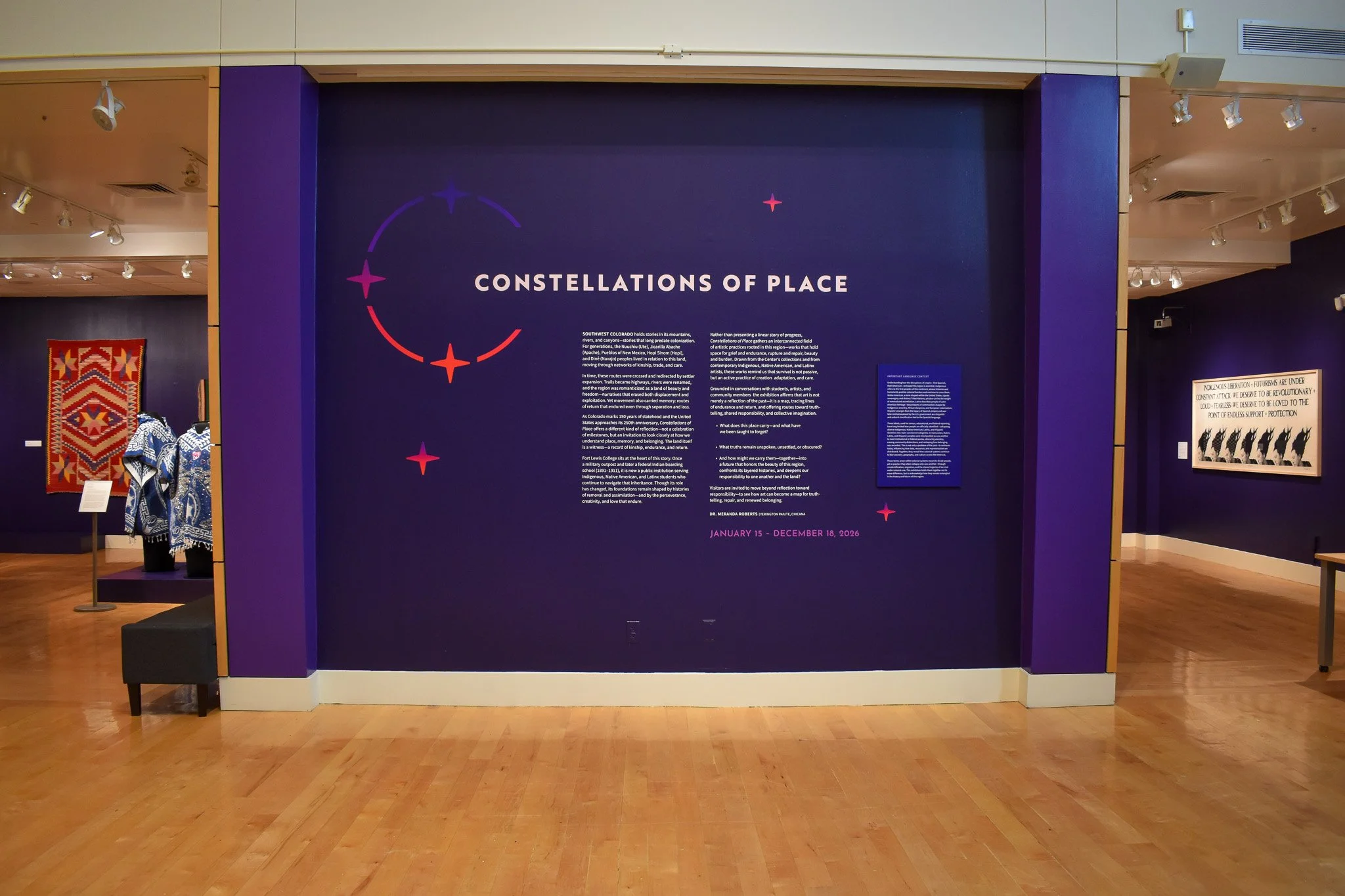
Southwest Colorado holds stories in its mountains, rivers, and canyons—stories that long predate colonization. For generations, the Nuuchiu (Ute), Jicarilla Abache (Apache), Pueblos of New Mexico, Hopi Sinom (Hopi), and Diné (Navajo) peoples lived in relation to this land, moving through networks of kinship, trade, and care.
In time, these routes were crossed and redirected by settler expansion. Trails became highways, rivers were renamed, and the region was romanticized as a land of beauty and freedom—narratives that erased both displacement and exploitation. Yet movement also carried memory: routes of return that endured even through separation and loss.
As Colorado marks 150 years of statehood and the United States approaches its 250th anniversary, Constellations of Place offers a different kind of reflection—not a celebration of milestones, but an invitation to look closely at how we understand place, memory, and belonging. The land itself is a witness—a record of kinship, endurance, and return.
Continued below…
-
Dr. Meranda Roberts, a citizen of the Yerington Paiute Tribe of Nevada and Chicana, is a scholar, a writer, an educator, and an independent curator whose work sits at the intersection of Indigenous history, museum studies, and visual culture. Guided by Indigenous methodologies and anti-colonial pedagogy, Dr. Roberts is committed to reconnecting museum collections with descendant communities and reshaping the way institutions engage with Indigenous histories and futures.
Prior curatorial projects include serving as co-curator and guest curator for such major institutions as the Field Museum of Natural History (co-curator, Native Truths: Our Stories. Our Voices.); Idyllwild Arts’ Native American Arts Festival (guest curator, Still We Smile: Humor as Correction and Joy); the Benton Museum of Art at Pomona College (guest curator Continuity: Cahuilla Basket Weavers and their Legacies); and The Church (Eternal Testament, co-curated with Shinnecock artist, Jeremy Dennis).
Dr. Roberts holds a Ph.D. in History and an M.A. in Public History from the University of California, Riverside, and she serves on the Scholarly Advisory Committee for the Smithsonian Women’s History Museum.
-
Solange Aguilar (Mescalero Apache, Yo'eme, Filipinx)
Linda Baker (Southern Ute, FLC alum)
Venancio Aragón (Diné, FLC alum)
Karen Clarkson (Choctaw)
Demian DinéYazhí (Diné)
Jason Garcia (Tewa-Santa Clara Pueblo)
Layli Long Soldier (Oglala Lakota)
Charine Pilar Gonzales (Tewa-San Ildefonso, FLC alum)
Darby Raymond-Overstreet (Diné)
Cara Romero (Chemehuevi)
Tyrrell Tapaha (Diné)
Vicente Telles (Latinx)
José Villalobos (Latinx)
-
(ARTICLE)“Bridging the Divide: An ongoing exhibition at Colorado’s Fort Lewis College unites a region through Indigenous art,” Native American Art Magazine (April/May 2026)
(ARTICLE) “Dazzling New Exhibit in the Center of Southwest Studies”, Preston Roundy, Fort Lewis College Independent (Mar. 7, 2026)
(RADIO) “Center of Southwest Studies’ exhibit rooted in landscape, people, and history of Southest Colorado,”Jamie Wanzek, Rocky Mountain Community Radio/KSUT (Feb. 13, 2026)
(PODCAST) “New art exhibitions offer creative interpretations of Native survival and endurance”, Art Hughes, Native America Calling (Feb. 6, 2026)
(REVIEW) “FLC’s Center Southwest Studies mounts major exhibition,” Judith Reynolds, The Durango Herald (Jan. 28, 2026)
(ARTICLE)“Constellations of Place' exhibition invites reflection on belonging, history and land at Fort Lewis College”, FLC News (Jan. 27, 2026)
(ARTICLE) Baker’s art featured in new FLC exhibit, Divine Windy Boy, The Southern Ute Drum (Jan. 23, 2026)
(VIDEO)“Constellations of Place,” Durango Local News, Paige Sparks, Jan. 19, 2026
(ARTICLE) “Layers of History,” Missy Votel, Durango Telegraph (Jan. 15, 2026)
(PREVIEW) “Center of Southwest Studies presents ‘Constellations of Place’”, The Southern Ute Drum (Dec. 24, 2025)
Dates
January 15-December 18, 2026
Location
Center of Southwest Studies at Fort Lewis College (Durango, CO)
Curated by
Meranda Roberts, PhD (Yerington Paiute, Chicana)
Exhibition Graphic Designer
Kevin Coochwytewa “Ligthning Kev” (Isleta Pueblo/Hopi)
Oversaw
Exhibition timeline and logistics, incl. artist communications, loan agreements and shipping arrangements; gallery preparation; artwork installation; lighting and labels; press materials and promotion; reception and events; photo-documentation
Fort Lewis College sits at the heart of this story. Once a military outpost and later a federal Indian boarding school (1891–1911), it is now a public institution serving Indigenous, Native American, and Latinx students who continue to navigate that inheritance. Though its role has changed, its foundations remain shaped by histories of removal and assimilation—and by the perseverance, creativity, and love that endure.
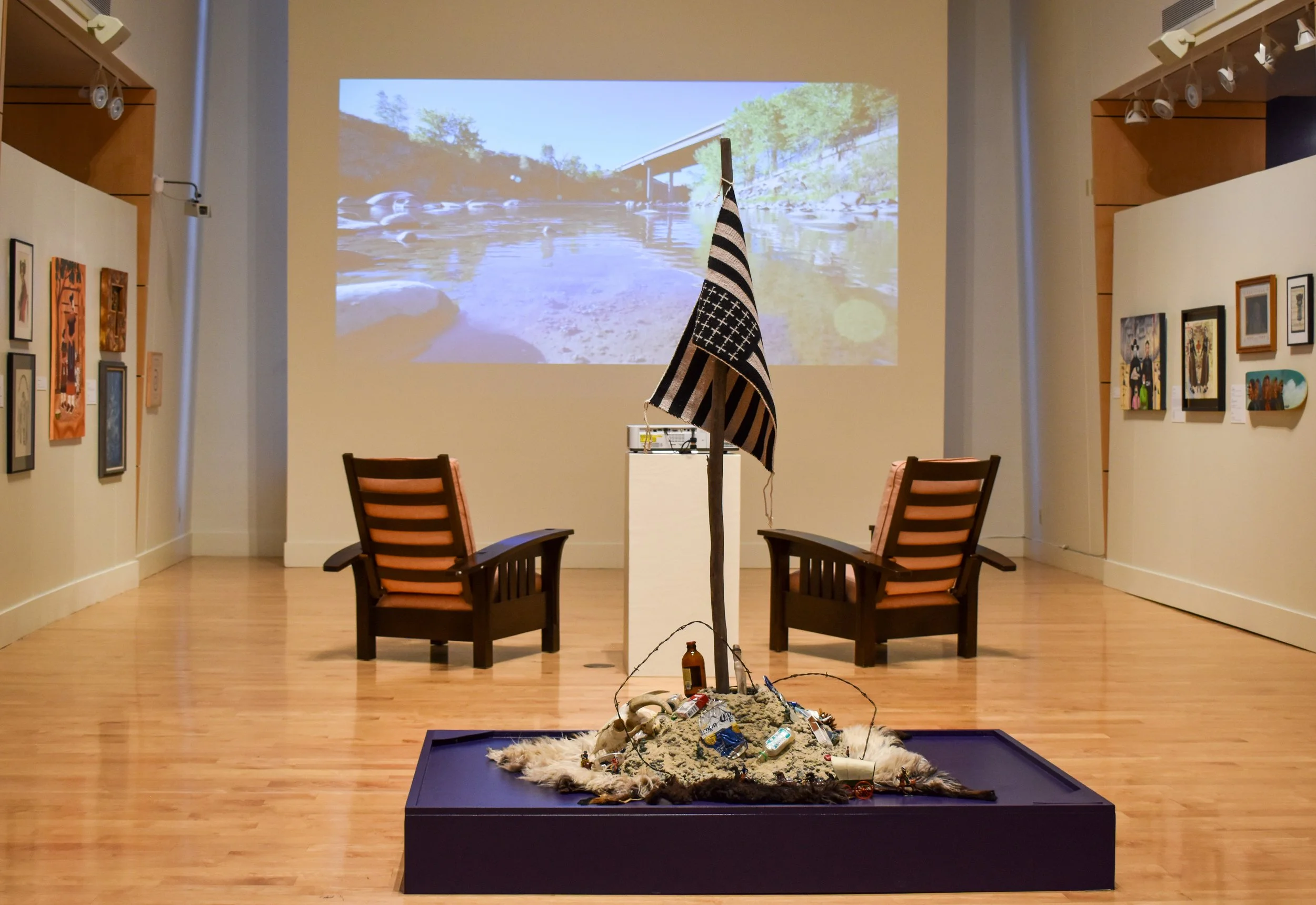
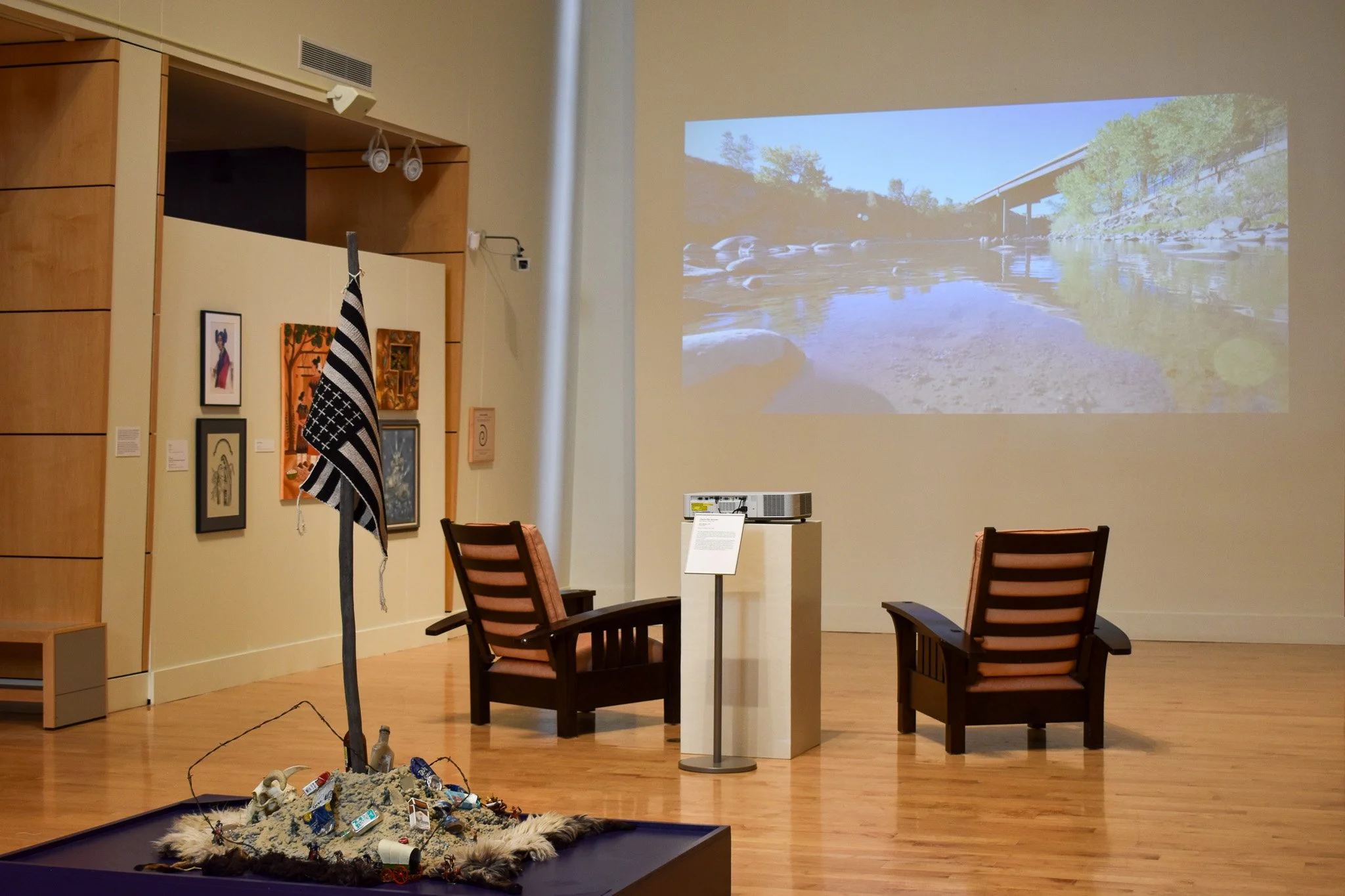
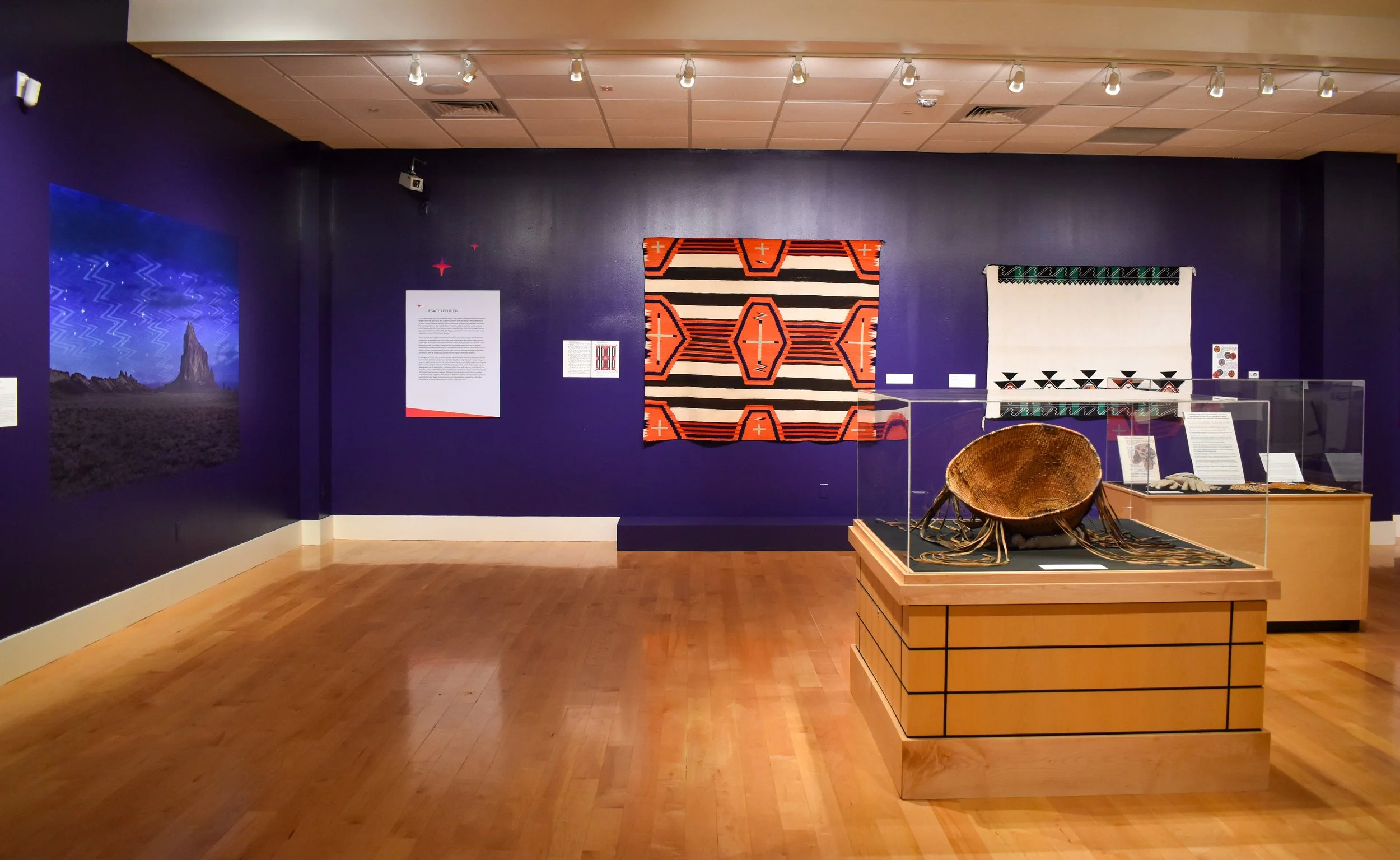
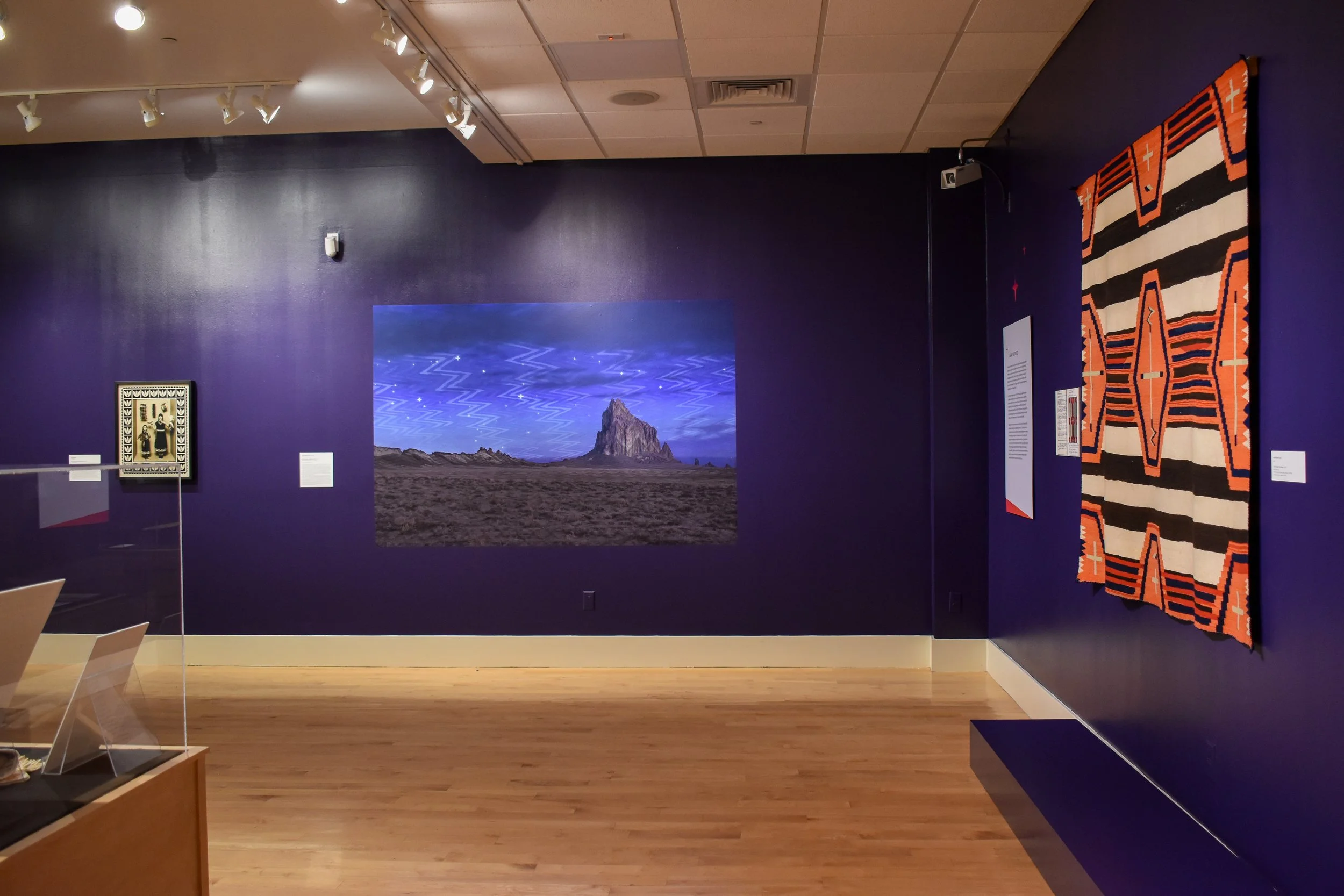
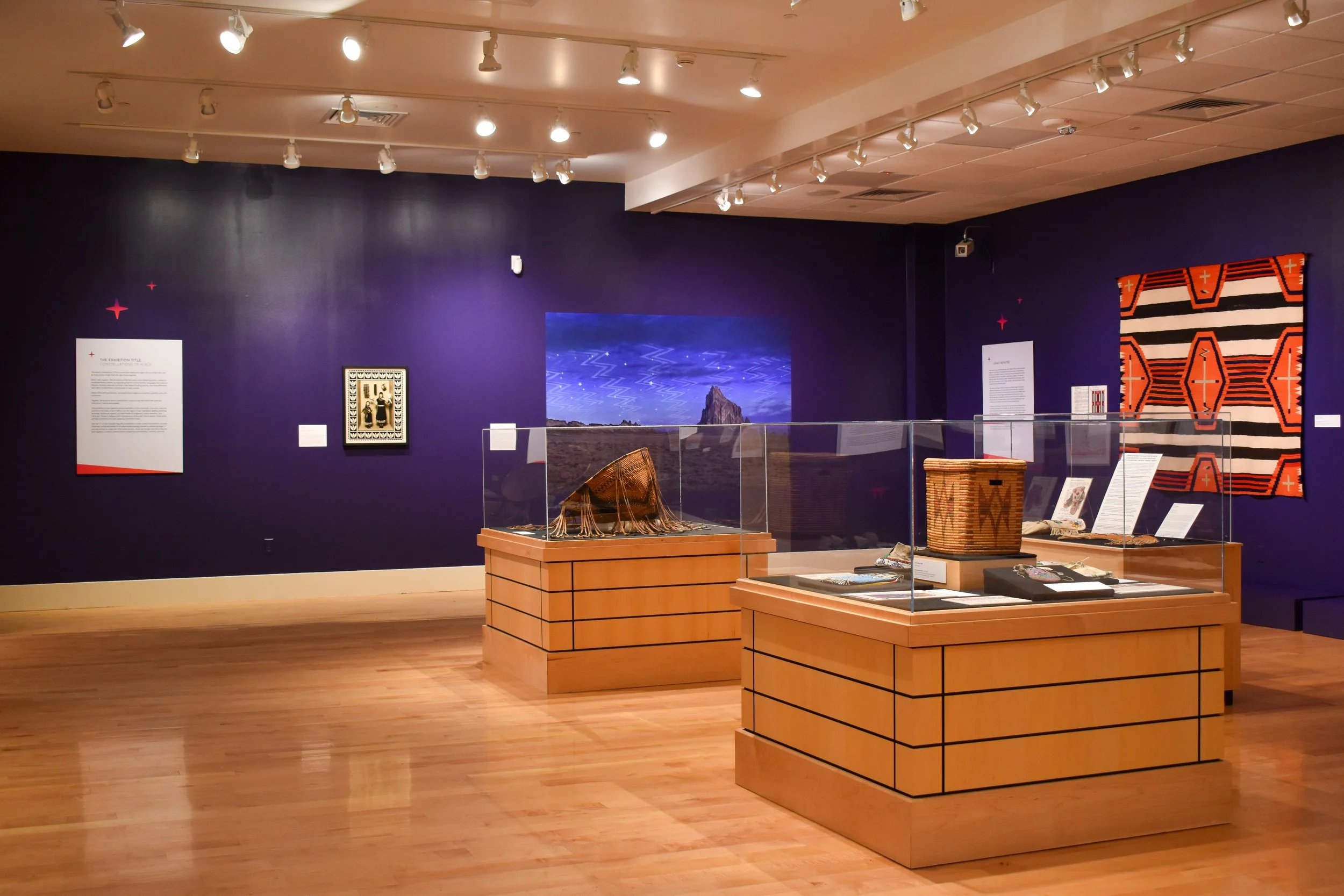
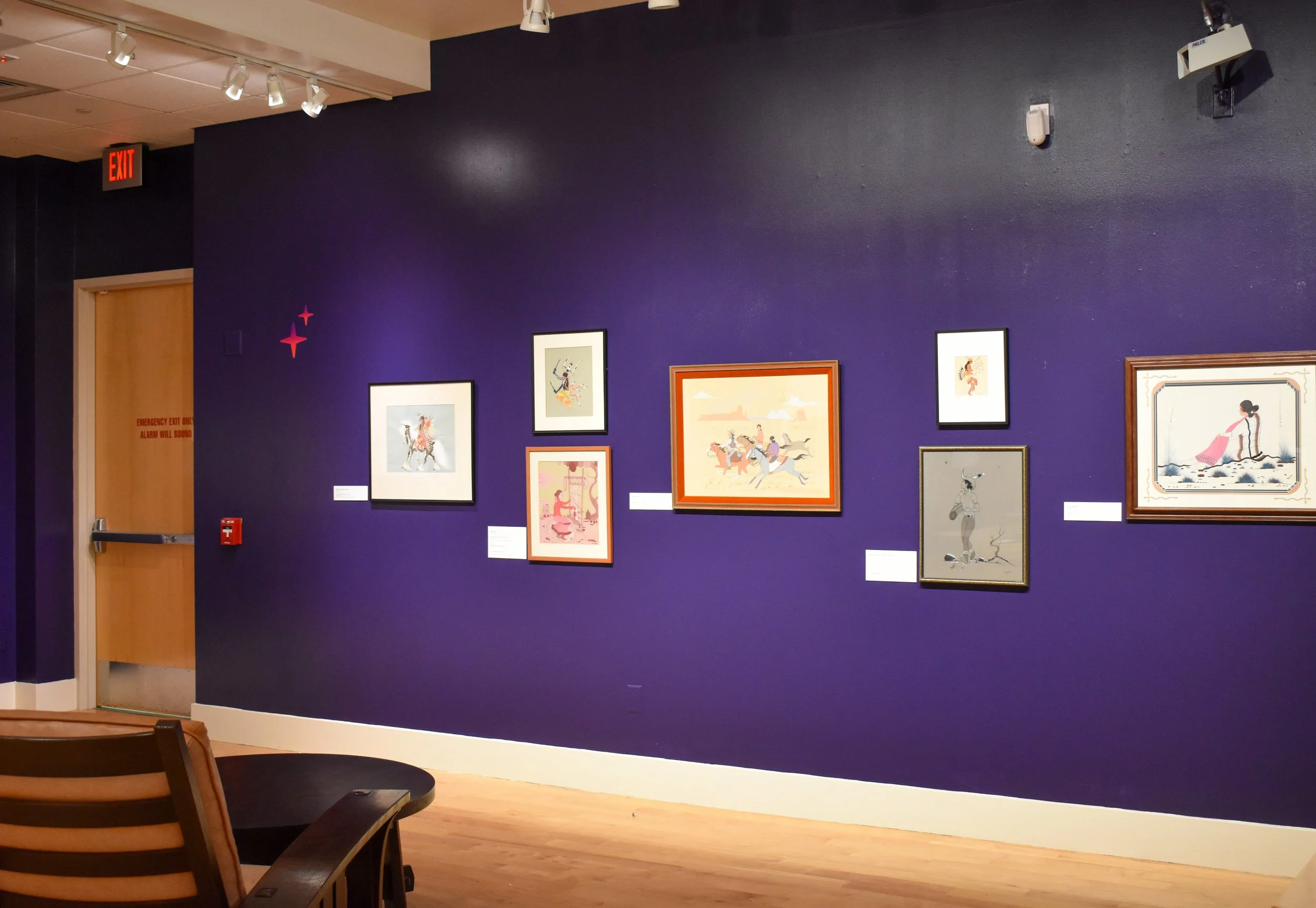
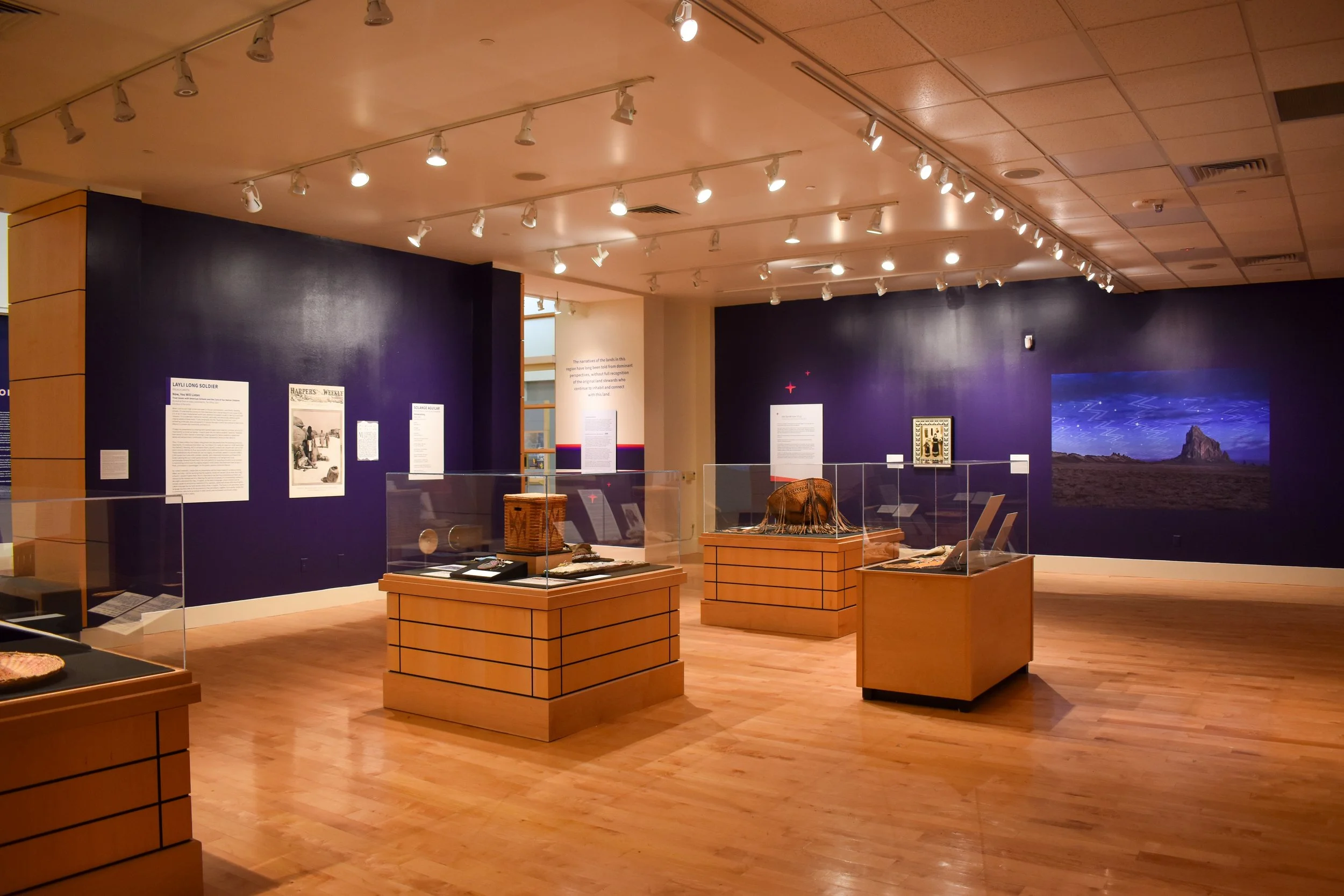
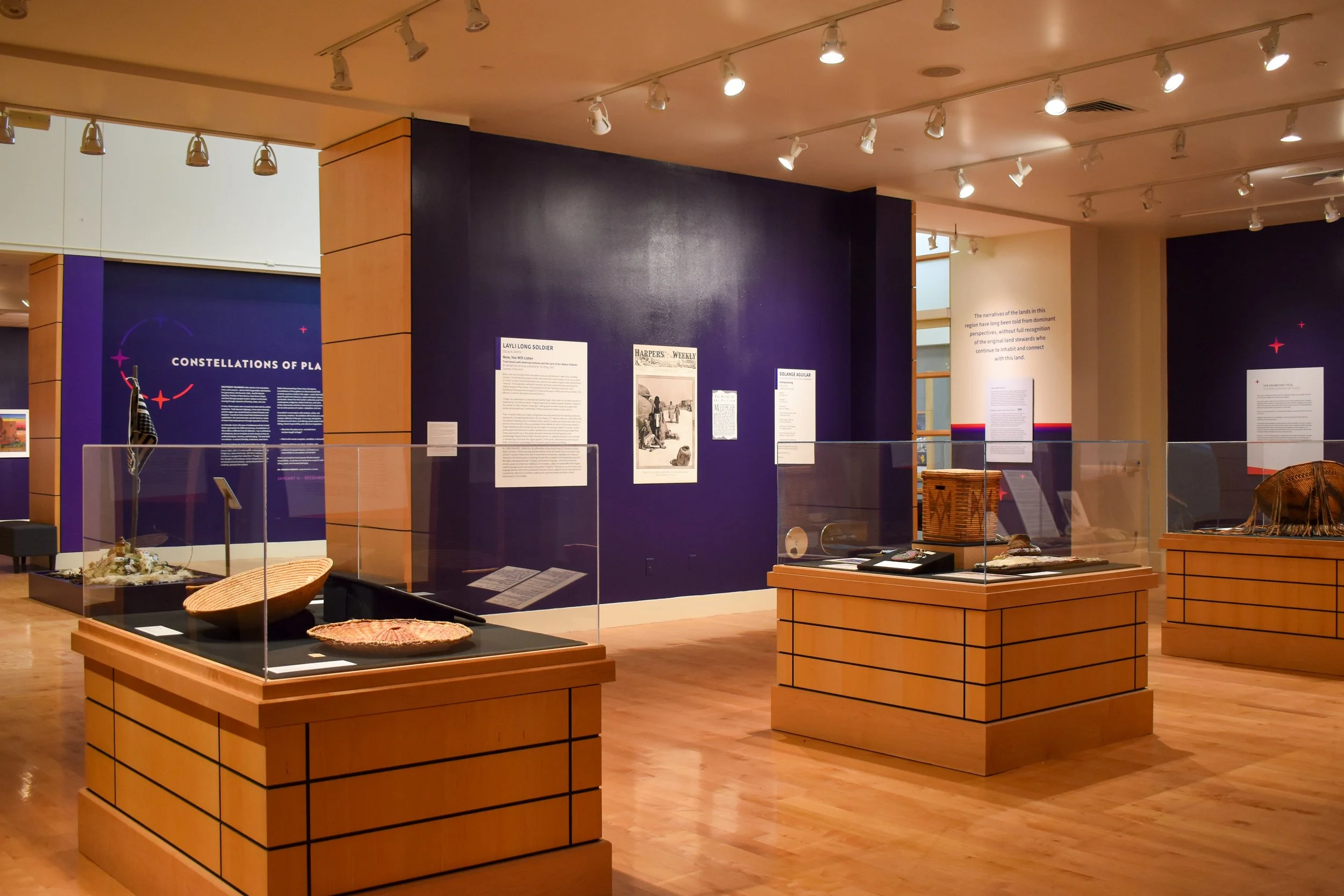
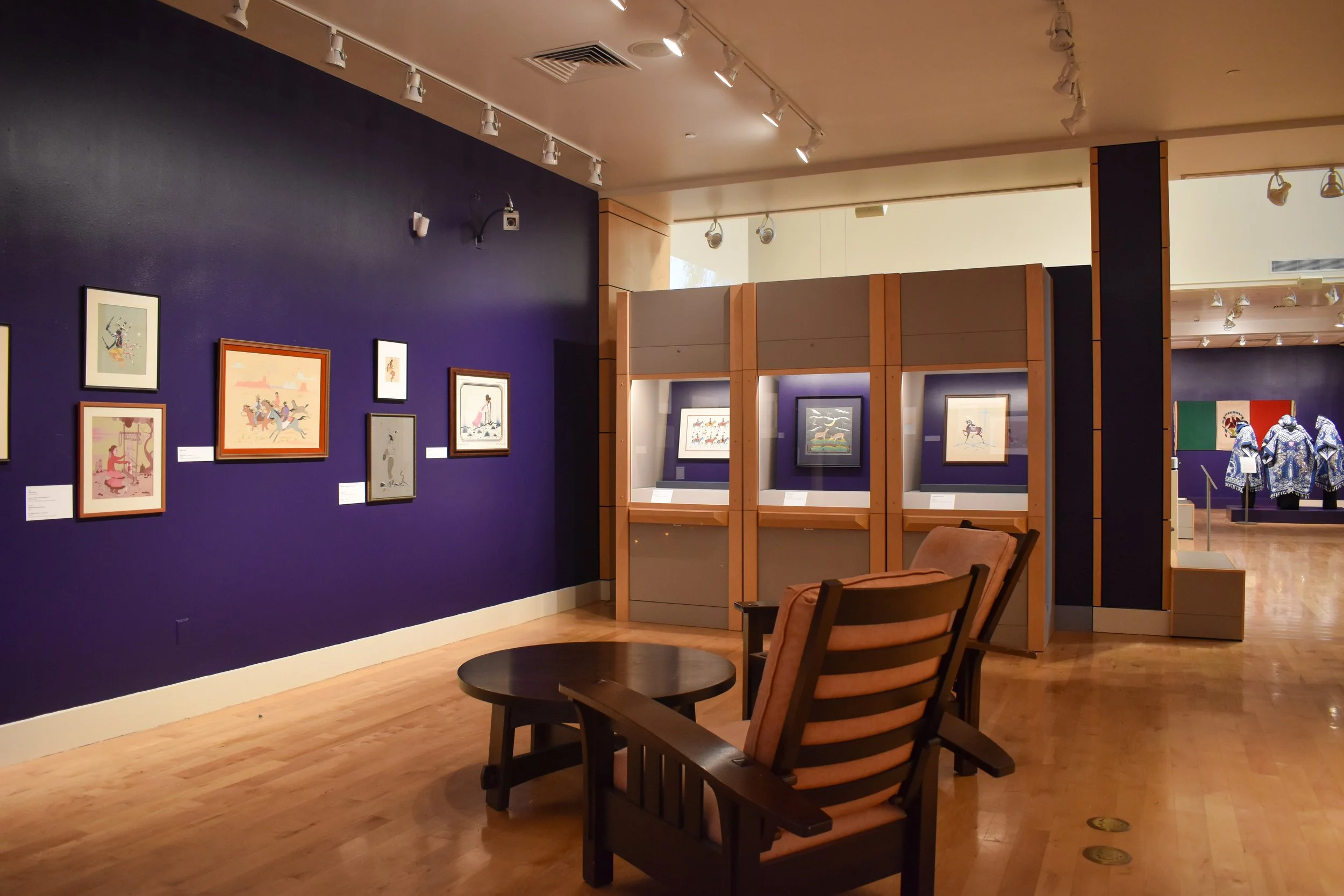
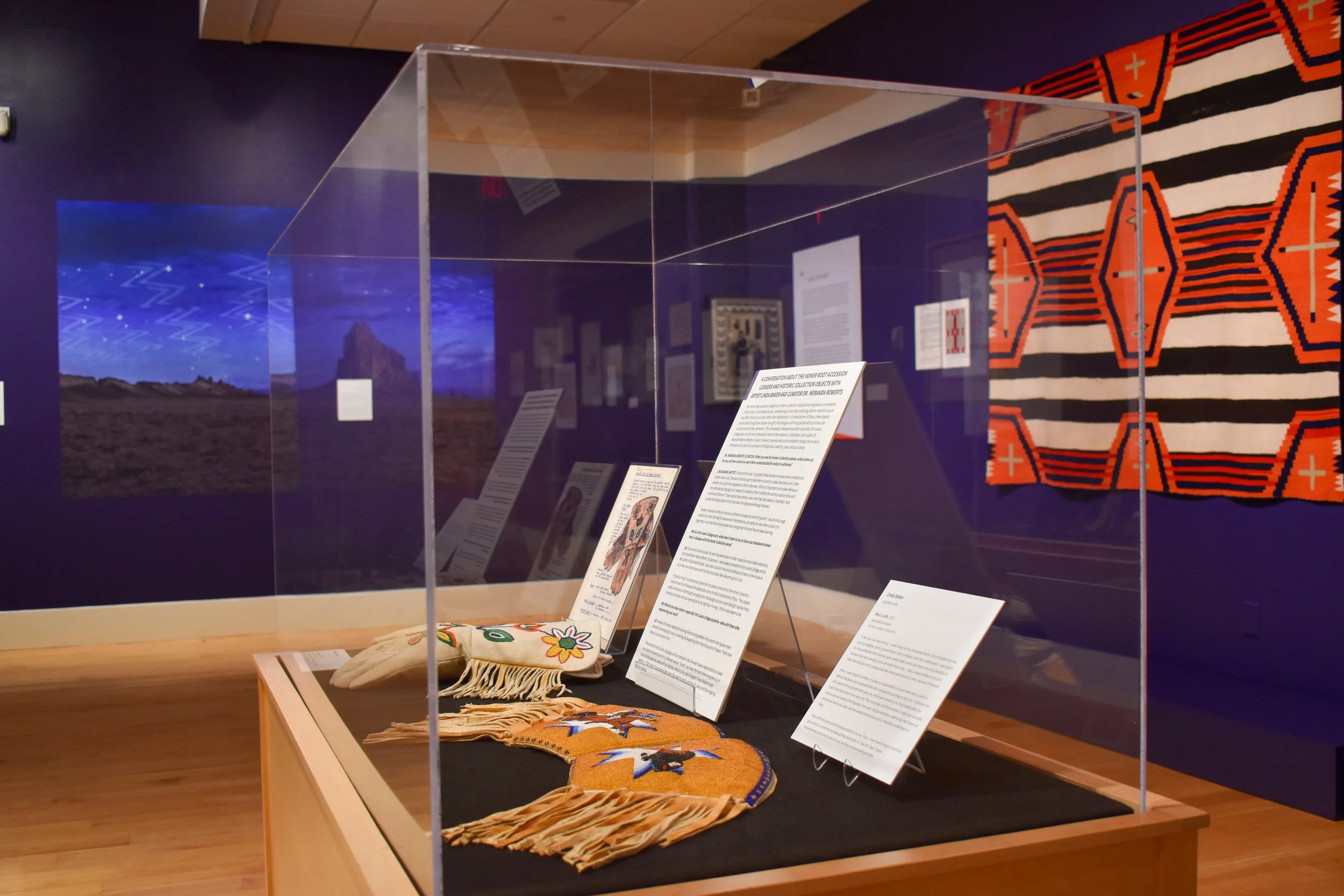
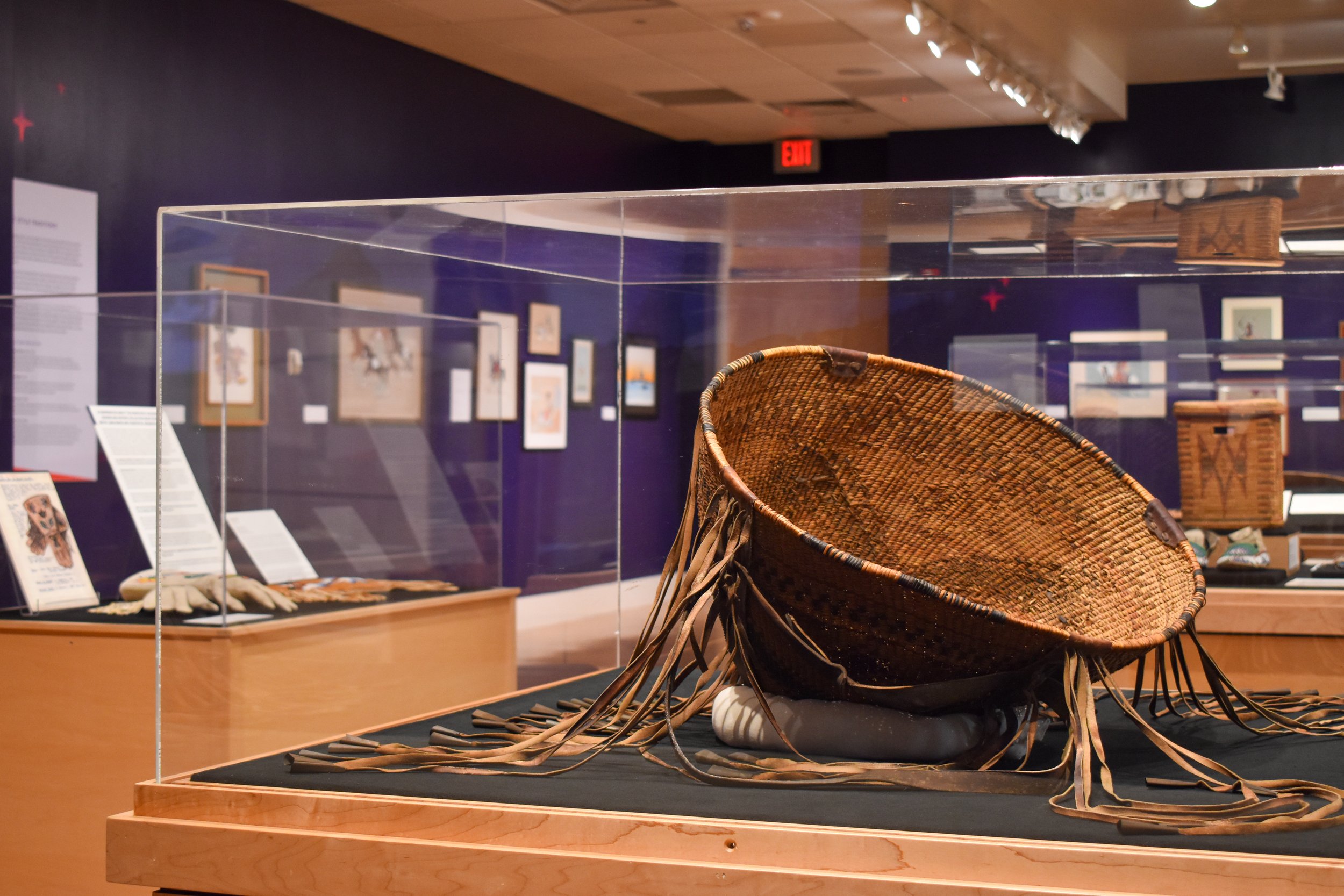
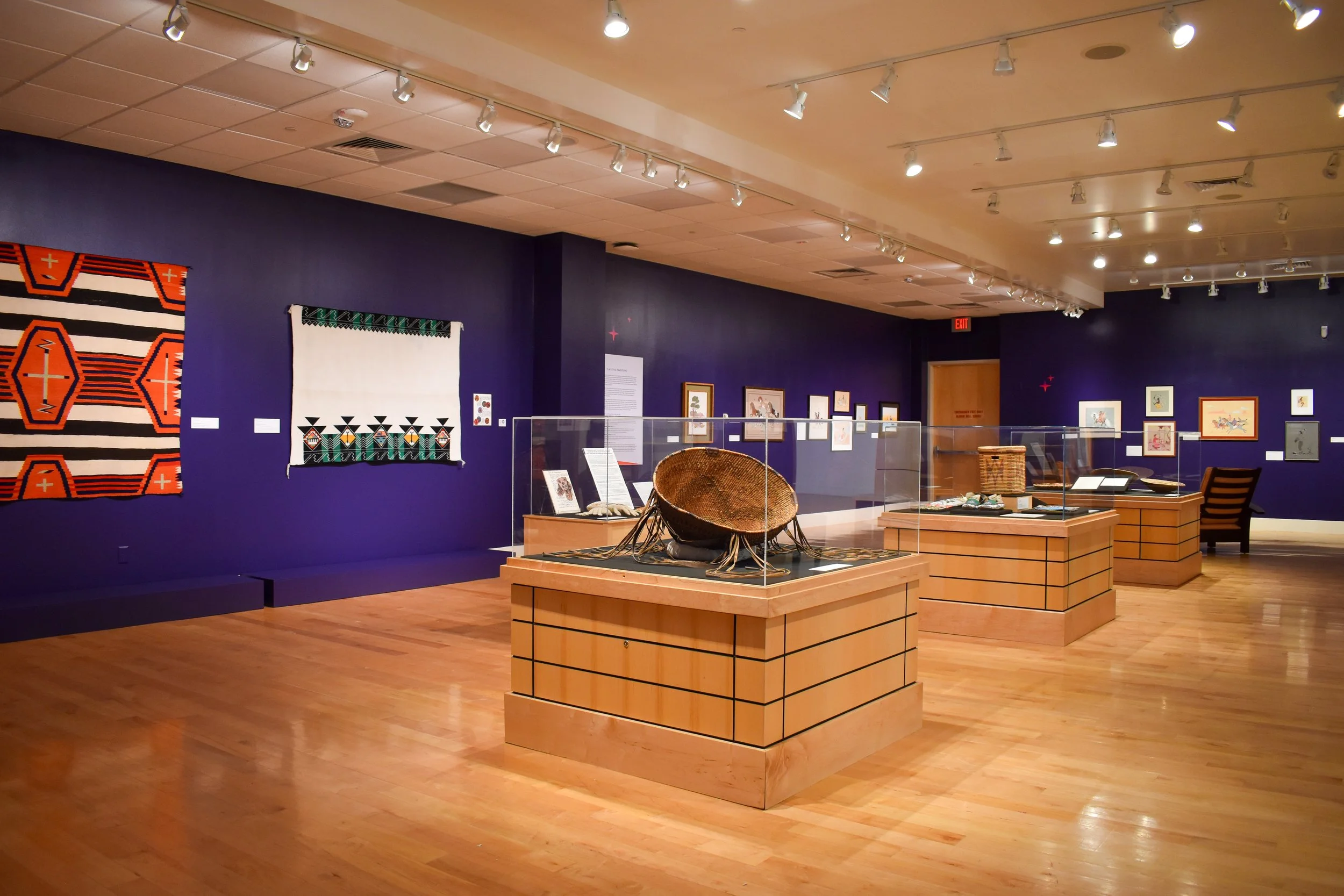
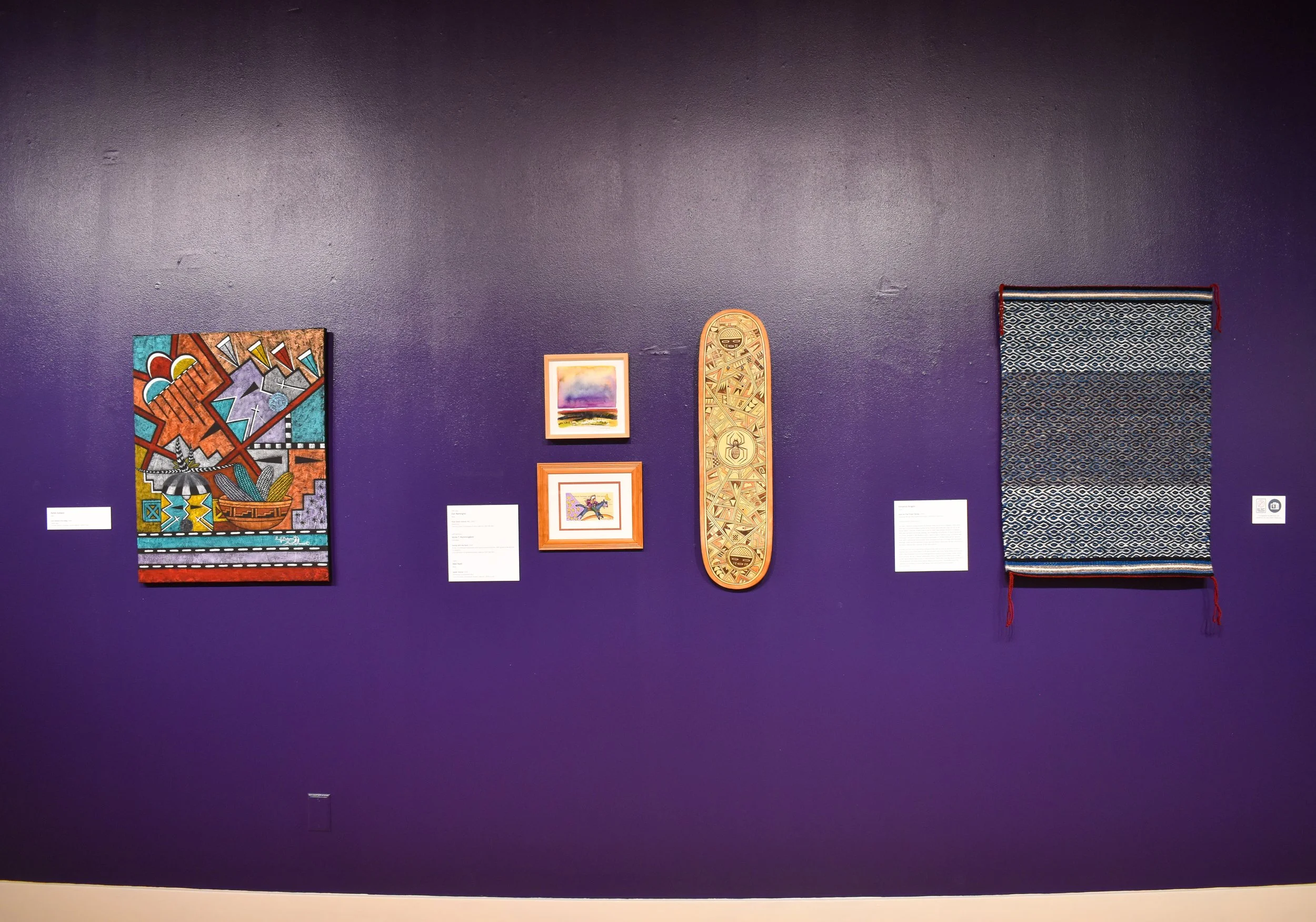
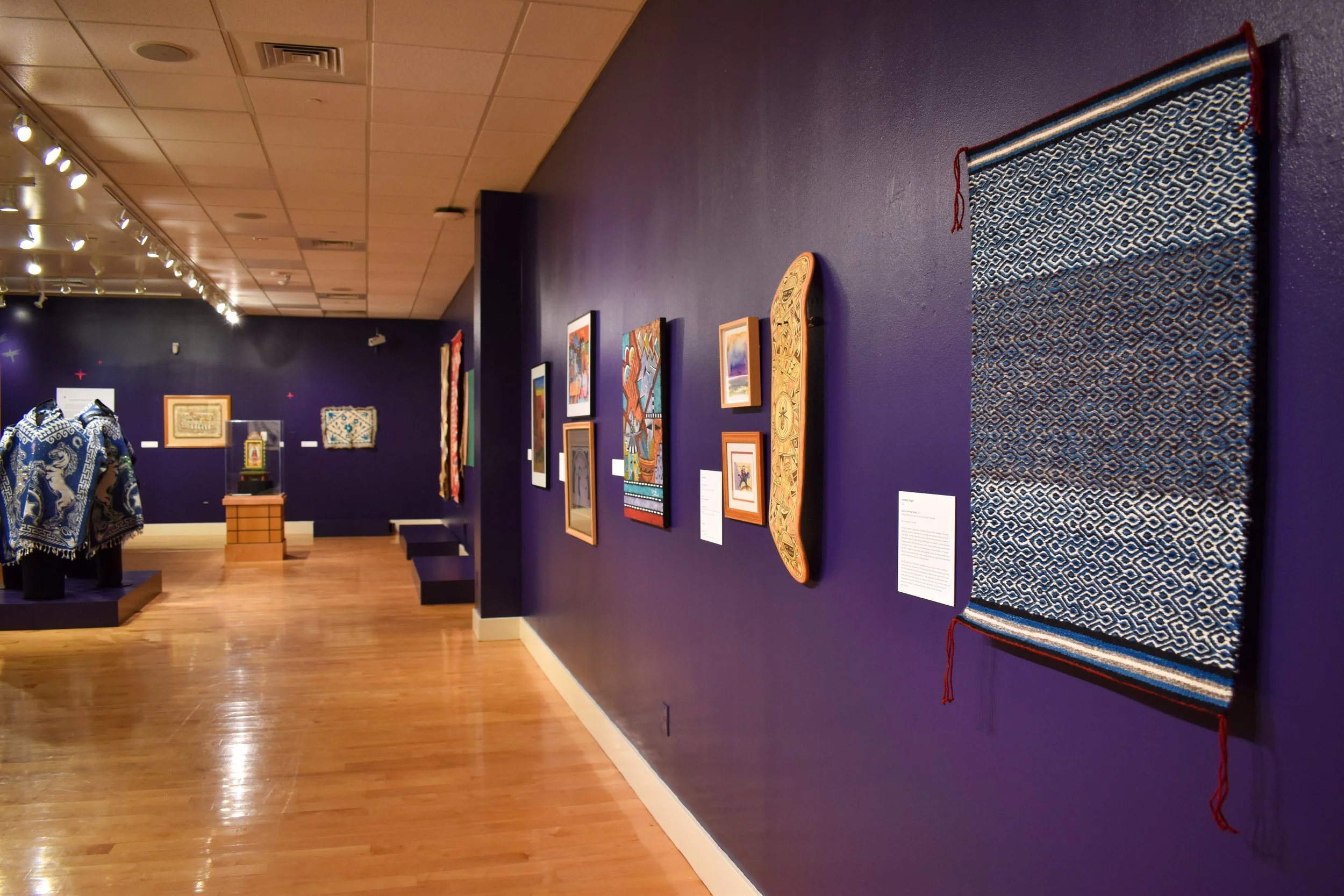
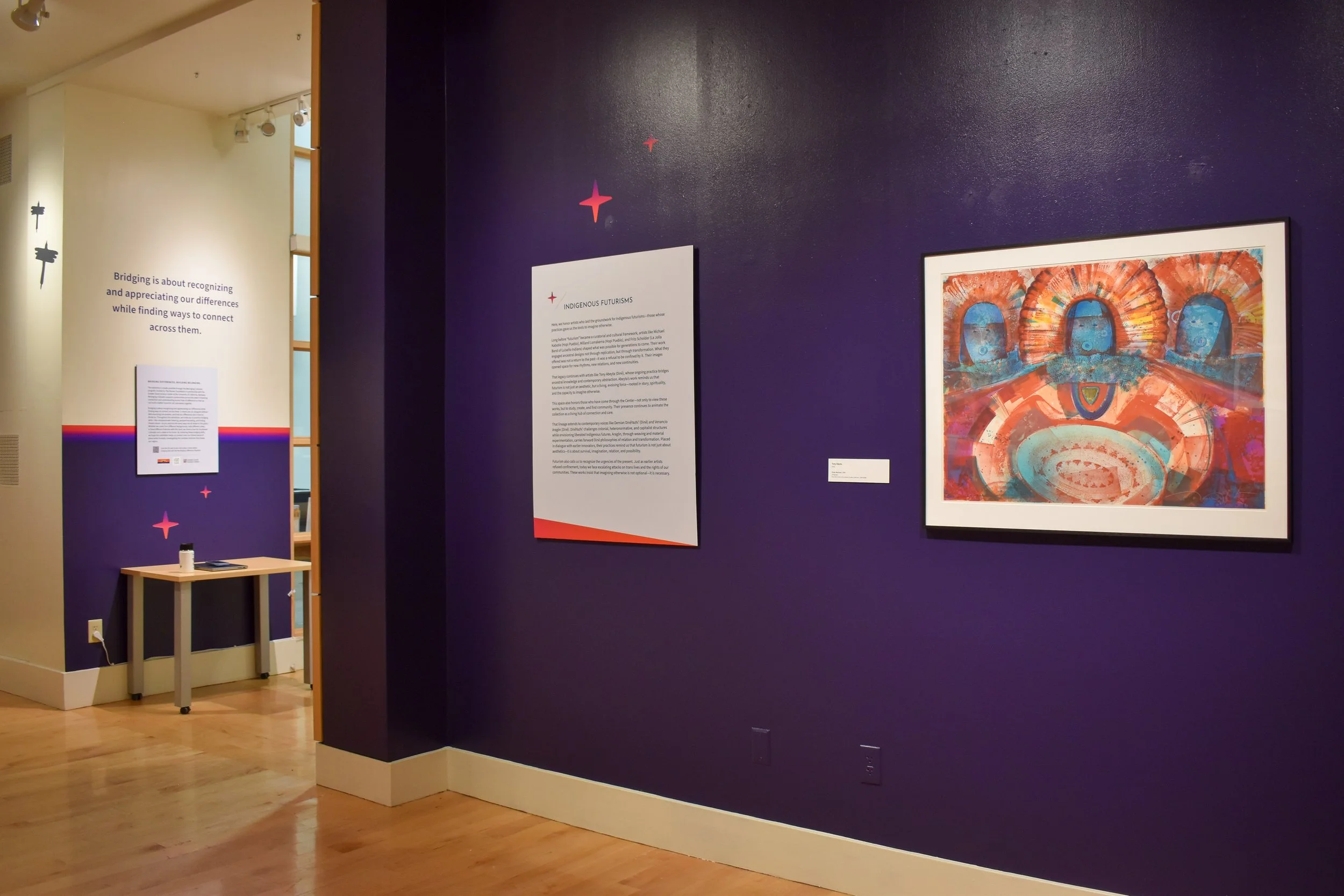
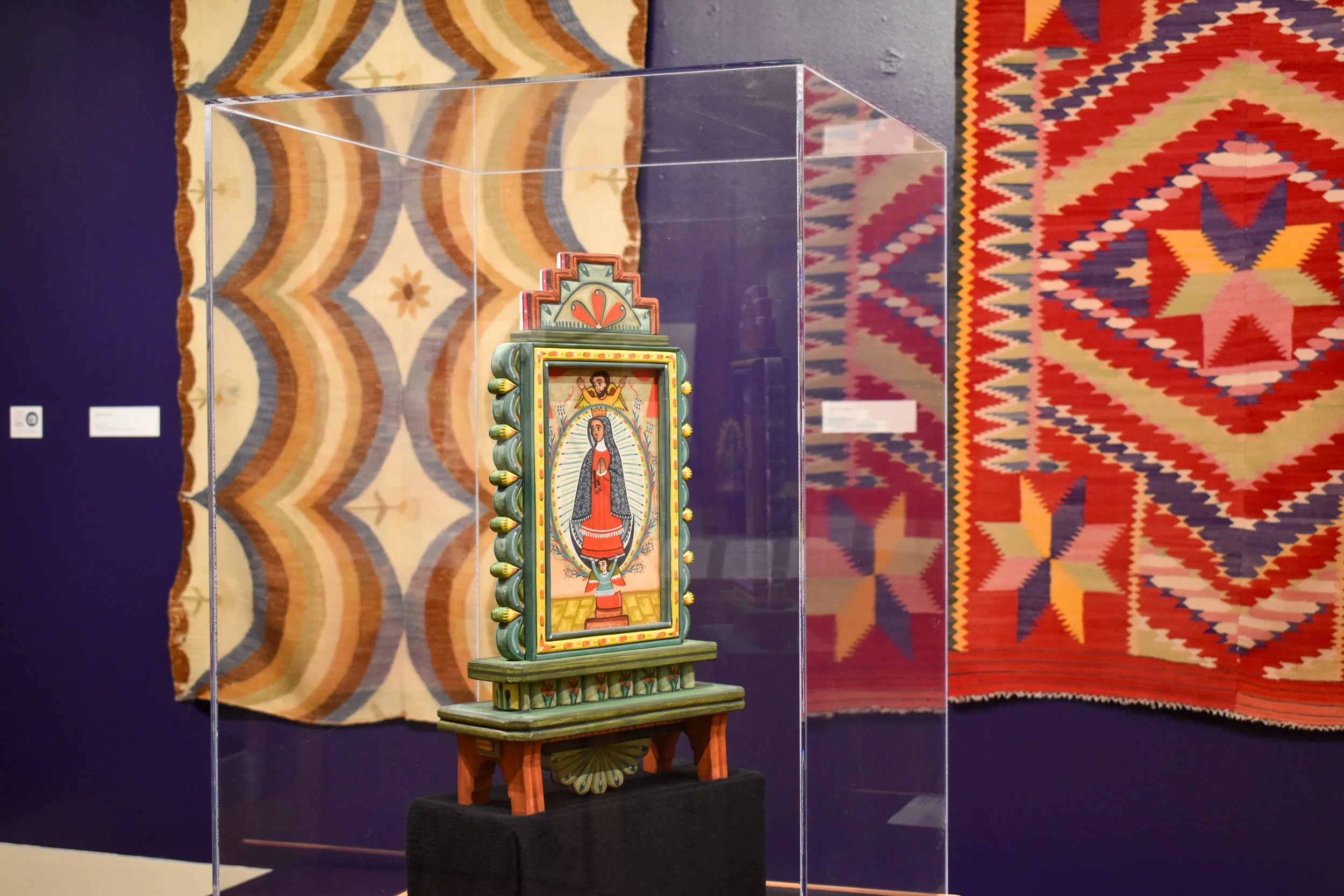
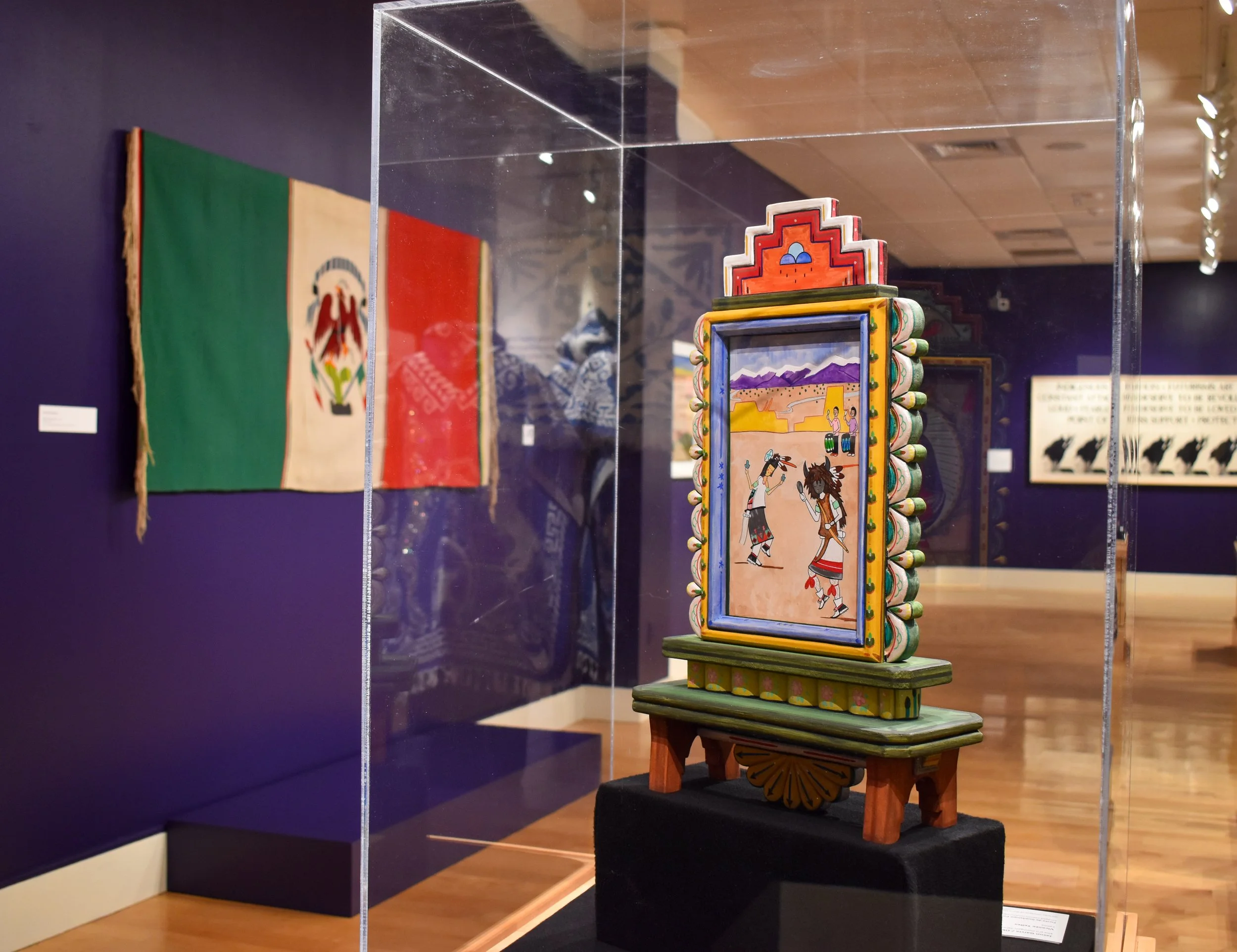
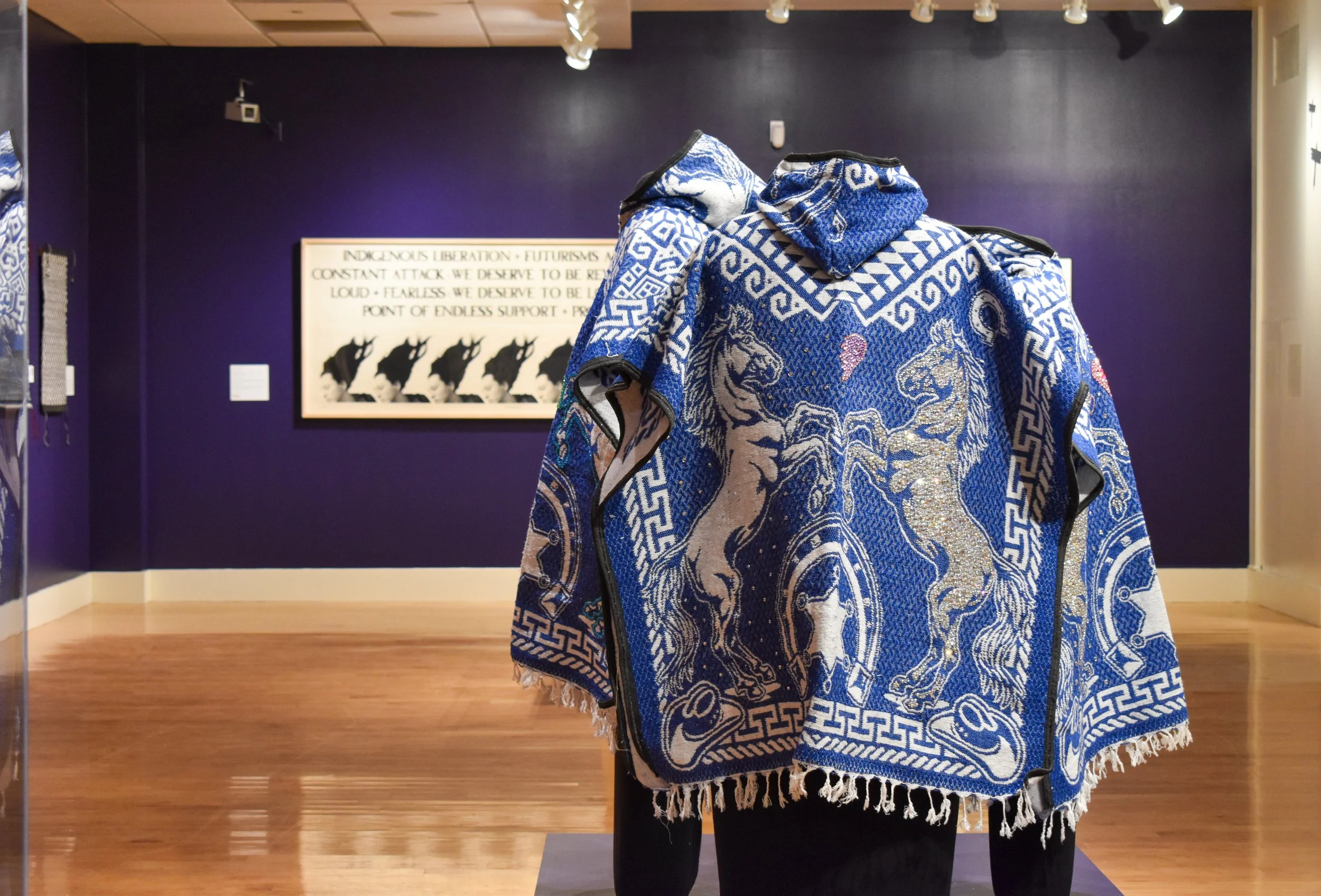
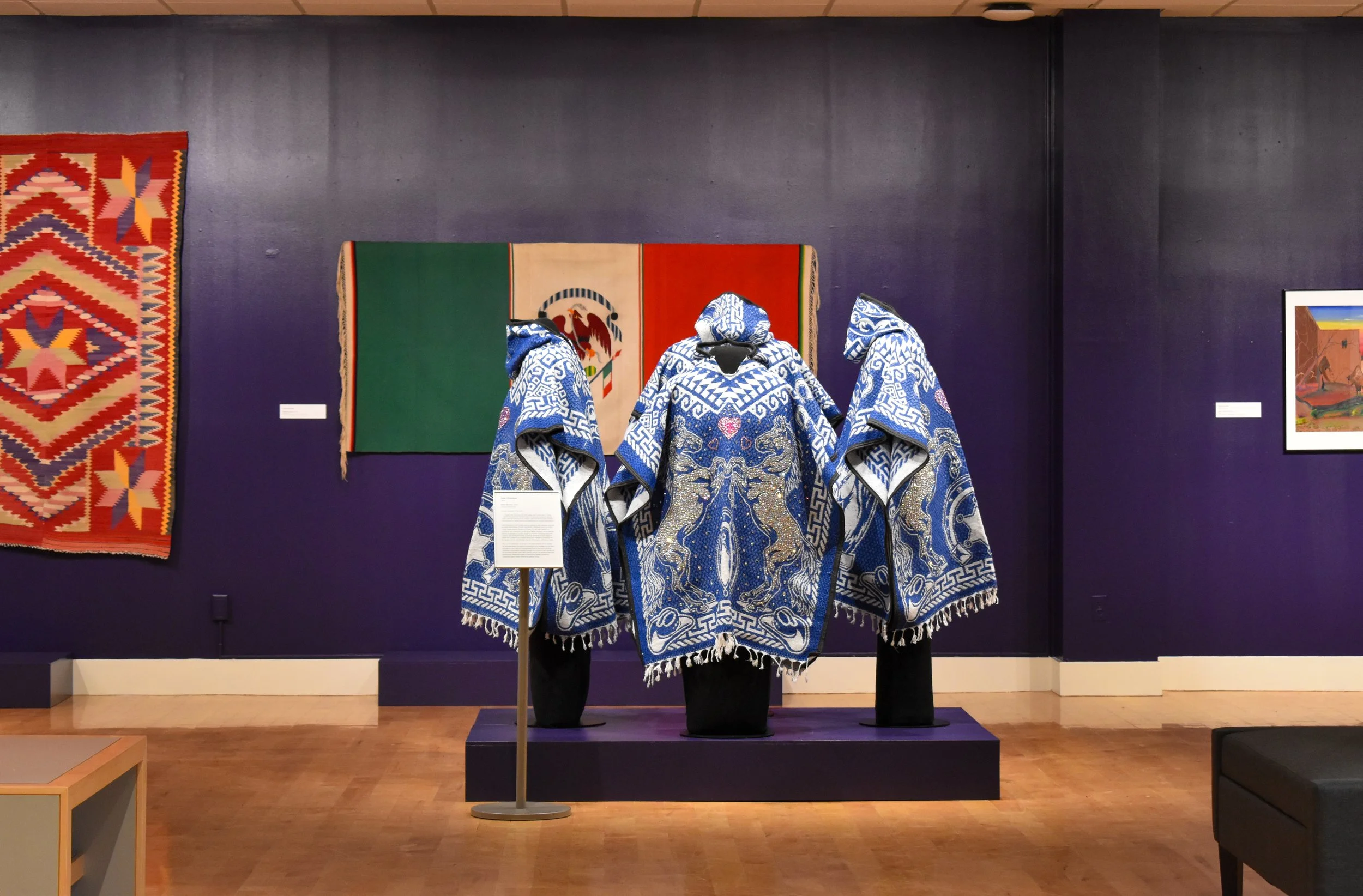
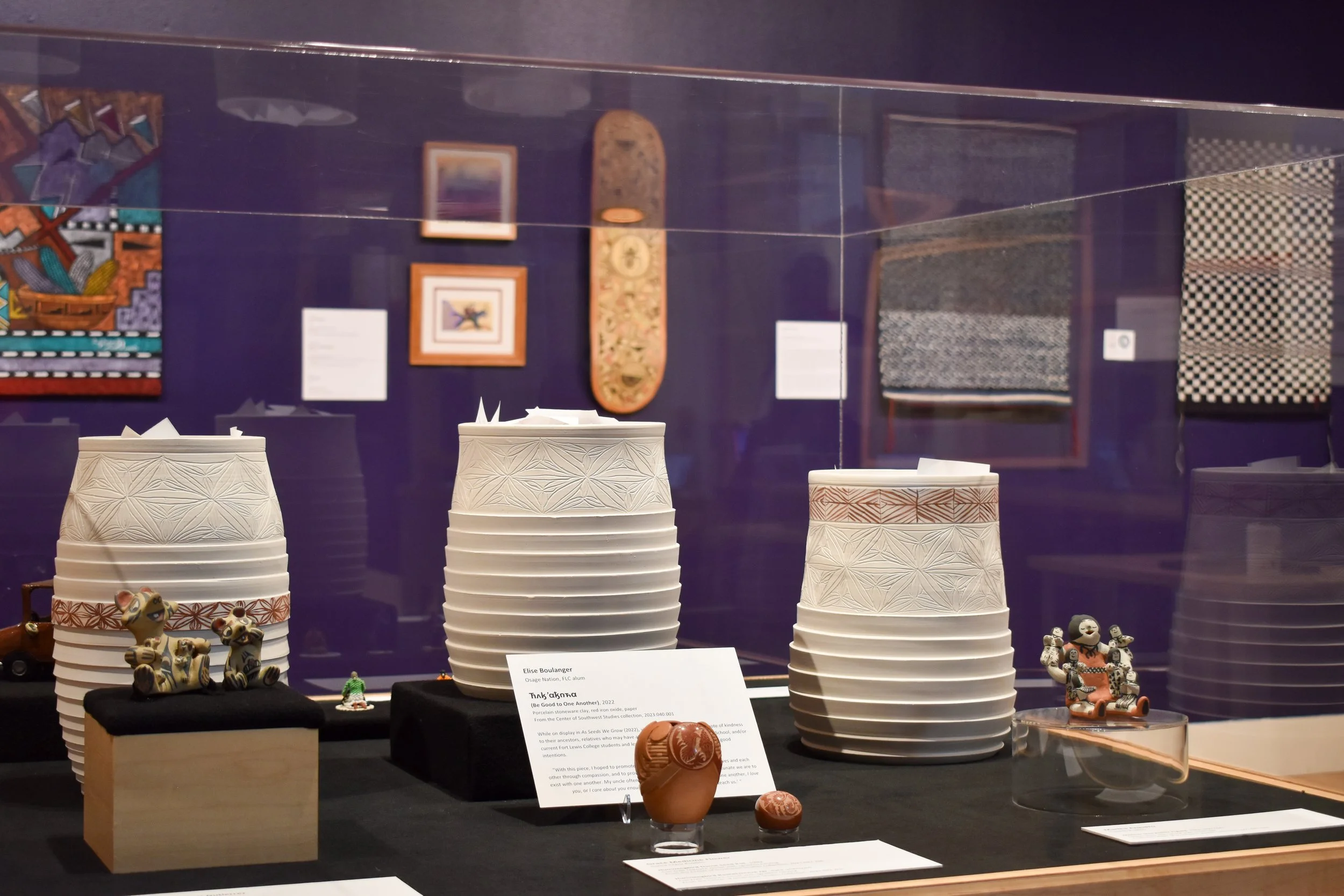
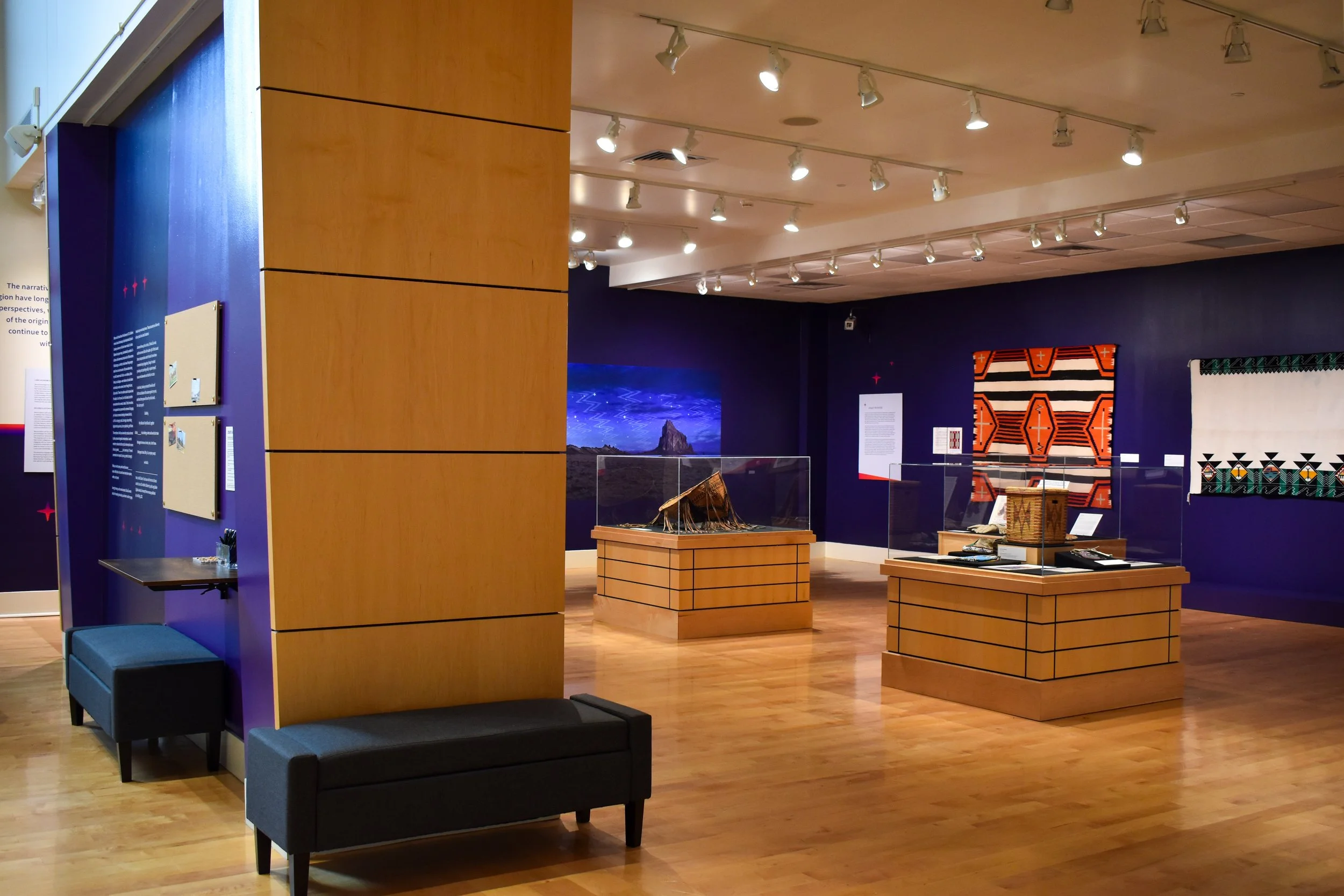
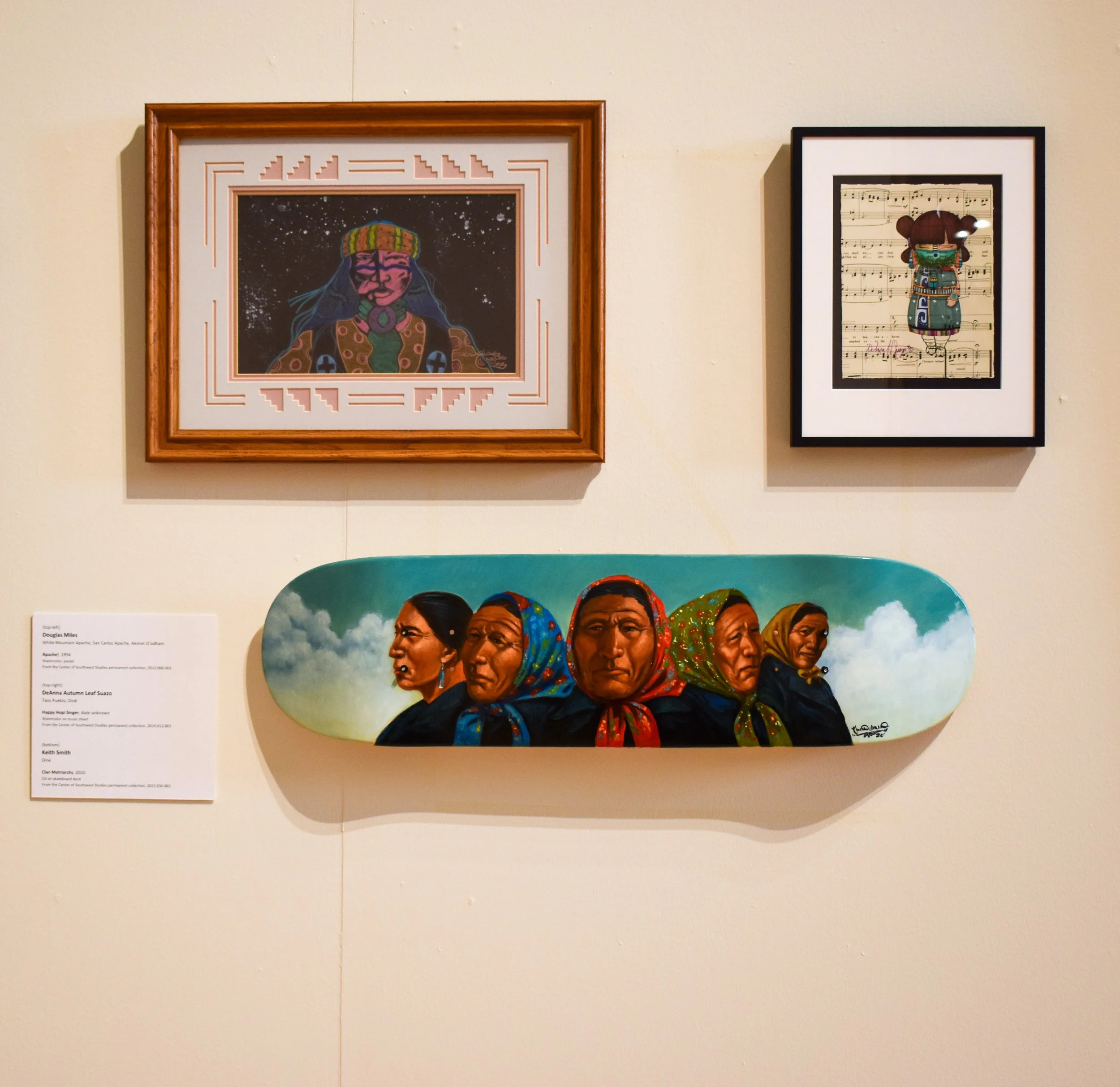
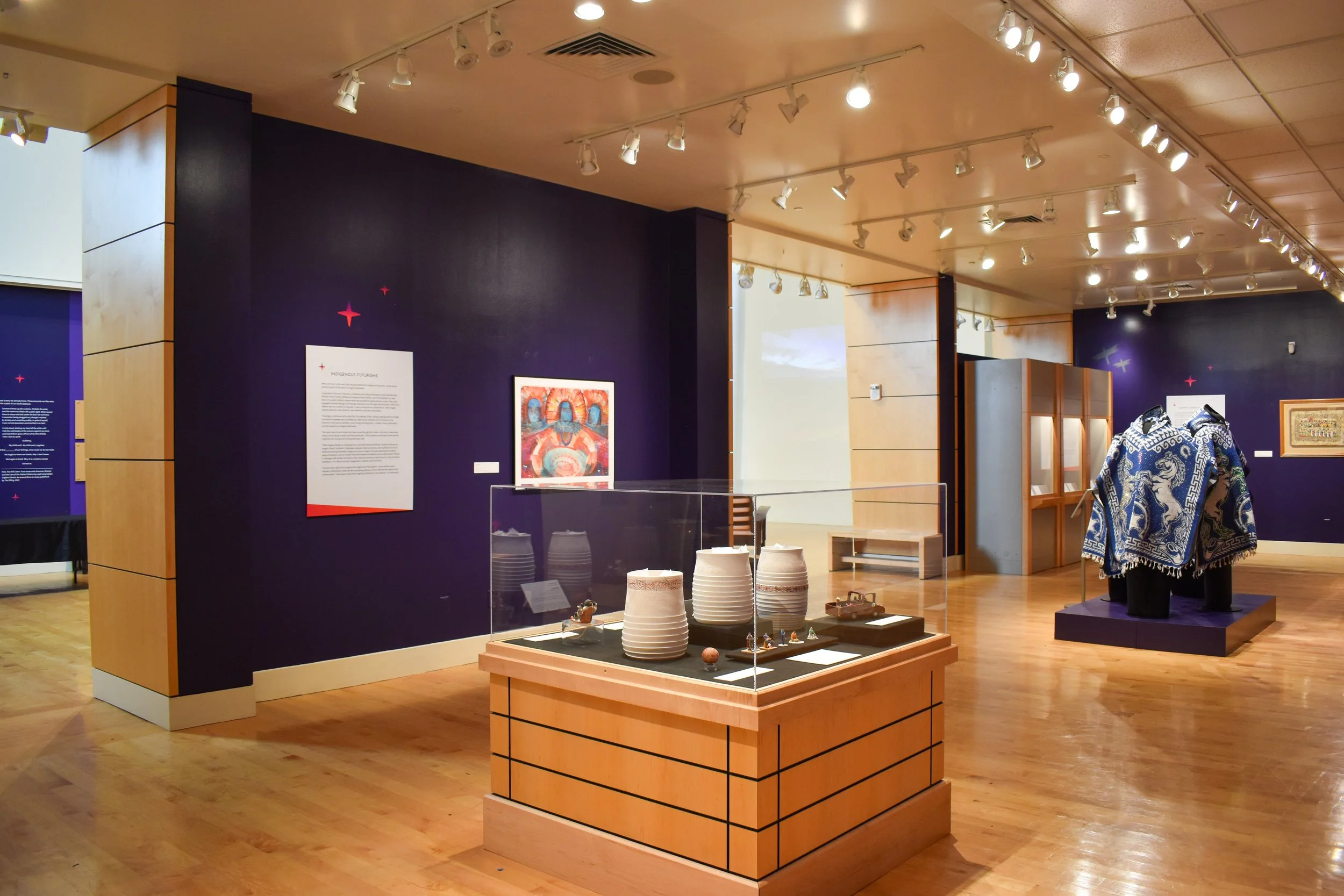
Rather than presenting a linear story of progress, Constellations of Place gathers an interconnected field of artistic practices rooted in this region—works that hold space for grief and endurance, rupture and repair, beauty and burden. Drawn from the Center’s collections and from contemporary Indigenous, Native American, and Latinx artists, these works remind us that survival is not passive, but an active practice of creation, adaptation, and care.
Grounded in conversations with students, artists, and community members, the exhibition affirms that art is not merely a reflection of the past—it is a map, tracing lines of endurance and return, and offering routes toward truth-telling, shared responsibility, and collective imagination.
This exhibition asks:
What does this place carry—and what have we been taught to forget?
What truths remain unspoken, unsettled, or obscured?
And how might we carry them—together—into a future that honors the beauty of this region, confronts its layered histories, and deepens our responsibility to one another and the land?
Visitors are invited to move beyond reflection toward responsibility—to see how art can become a map for truth-telling, repair, and renewed belonging.